

Here’s what’s happening. The World Liberty Financial controversy centers on how the project used its own WLFI tokens as collateral to borrow millions in stablecoins. On-chain data shows WLFI deposited its native tokens into the Dolomite lending protocol. In return, it borrowed roughly $75 million in stablecoins, including 11.4 million USDC. The team then reportedly moved those funds to Coinbase Prime, presumably to trade or convert to fiat.
World Liberty Financial Controversy: A Classic ‘Circular’ Setup?
Why all the outrage? Because the structure looks circular. WLFI essentially leveraged its own, self-issued tokens to extract real-world value. It’s a move that one Polymarket ambassador described as “milking crypto”. The critics point to a few glaring facts: WLFI previously raised $550 million via a token sale, insiders control a significant chunk of the supply, and founder-held tokens alone are valued at billions on paper. The controversy is amplified because WLFI now dominates Dolomite, supplying over 55% of the protocol’s total liquidity.
WLFI Price Crashes 21% as Borrowing Pools Get Strained
Unsurprisingly, the backlash has hammered the token. The WLFI price plunged to a low of $0.077, marking a brutal 21% drop this month alone.
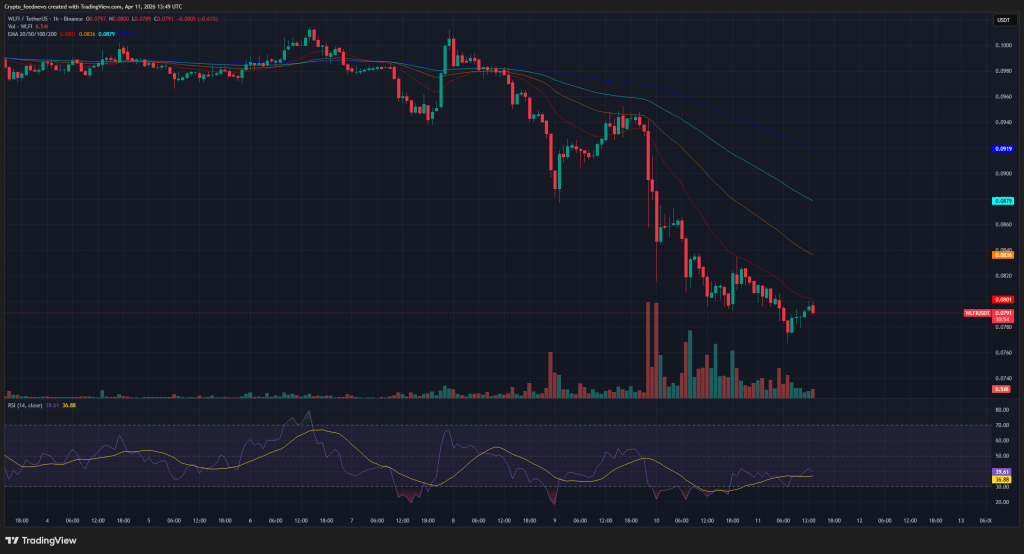
Things get even riskier behind the scenes. The USD1 stablecoin pool on Dolomite is now severely strained, with a utilization rate of about 93%. That means almost all available funds are already lent out, raising the risk that smaller depositors could face delays if they try to withdraw.
To add to the mystery, WLFI recently moved another 3 billion tokens worth roughly $266 million—to an unidentified wallet. This opacity only fuels more skepticism.
My Thoughts
This is a wild one. On one hand, WLFI is using DeFi as intended leveraging assets for liquidity. But using your own minted token as collateral to borrow real stablecoins? That’s a massive red flag. It looks more like a liquidity extraction play than a sustainable financial strategy. The 93% utilization on the USD1 pool is the real canary in the coal mine. If borrowers don’t repay, smaller depositors could get stuck. For traders, this is a clear warning to stay away from projects with highly centralized, opaque tokenomics. This controversy could also invite unwanted regulatory attention. Watch Dolomite closely.