

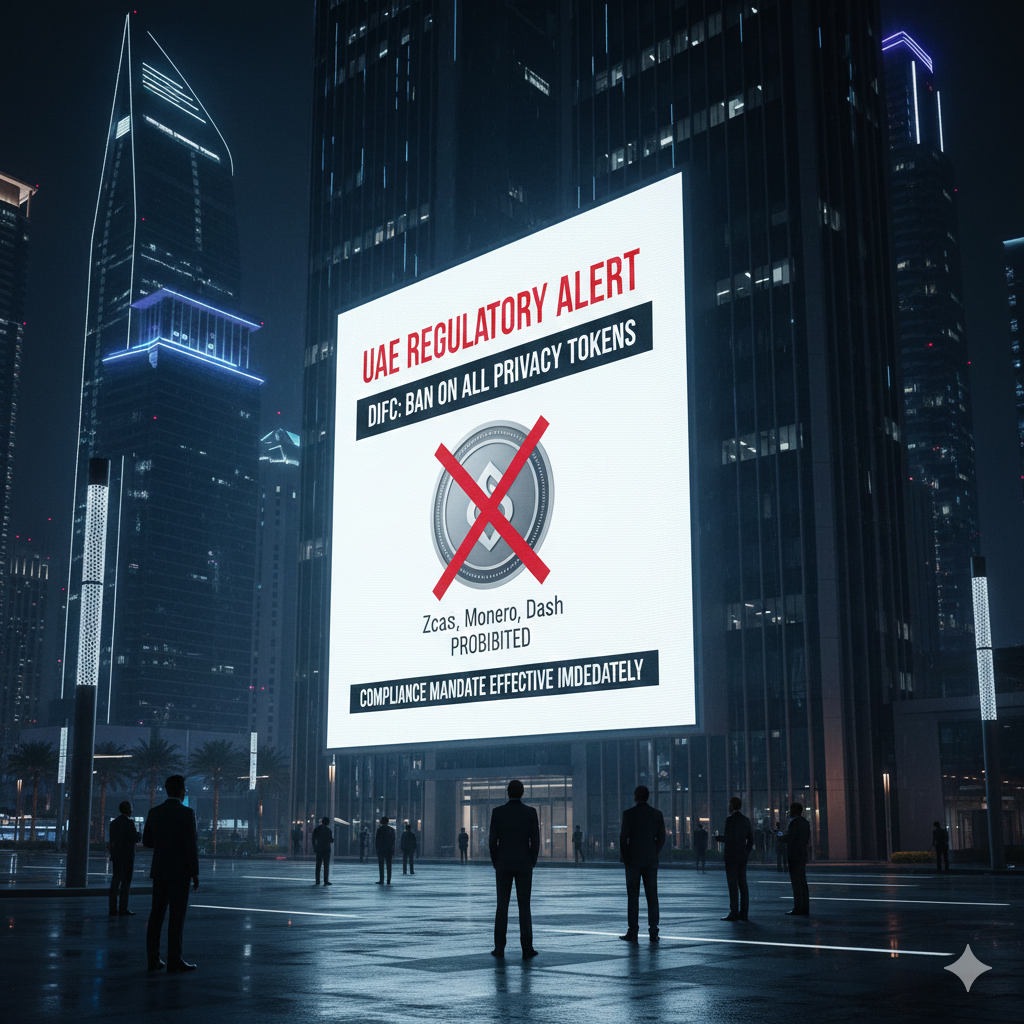
Dubai Draws a Hard Line: UAE Crypto Regulations Target Privacy Tokens
The regulatory landscape in the Middle East is shifting decisively. In a major move to combat financial crime, Dubai’s Financial Services Authority (DFSA) has enacted strict new UAE crypto regulations, banning all privacy-enhancing tokens within the Dubai International Financial Centre (DIFC). Effective January 12, this prohibition covers trading, promotion, and fund operations involving assets like Monero (XMR) and Zcash (ZEC), signaling a zero-tolerance stance on anonymity.
The DFSA’s reasoning is clear: privacy features that obscure transaction history and wallet ownership make it “nearly impossible” for firms to comply with global Anti-Money Laundering (AML) standards set by the Financial Action Task Force (FATF). This bold move contrasts with ongoing, more nuanced discussions in the United States and places the onus on DIFC companies to ensure their crypto activities are fully transparent and compliant.
Stablecoins Redefined Under New UAE Crypto Regulations
The updated framework also brings crucial clarity to the stablecoin sector. The new UAE crypto regulations formally define “fiat crypto tokens,” requiring them to be pegged to fiat currency and backed by high-quality, liquid reserves. This directly excludes algorithmic stablecoins from the “stablecoin” classification; they will now be treated as general, higher-risk crypto tokens.
Despite this tougher line, the UAE continues to foster licensed innovation. The regulations introduce an industry-driven approval process, allowing companies to self-assess whether a token meets compliance standards, rather than relying on a government-approved list. This approach balances control with flexibility, as seen with the recent launch of Zand AED, the UAE’s first licensed stablecoin.
My Thoughts
This is a defining moment for Gulf crypto regulation. By banning privacy tokens, the UAE is unequivocally choosing transparency and institutional adoption over cryptographic anonymity. This will likely attract more traditional finance players to the DIFC but could push privacy-focused projects and users elsewhere. The stablecoin clarity is a net positive, providing a trusted framework for compliant, fiat-backed digital money. Overall, these rules solidify the UAE’s model as a regulated, institutional-friendly gateway, setting a precedent other global hubs may follow.