

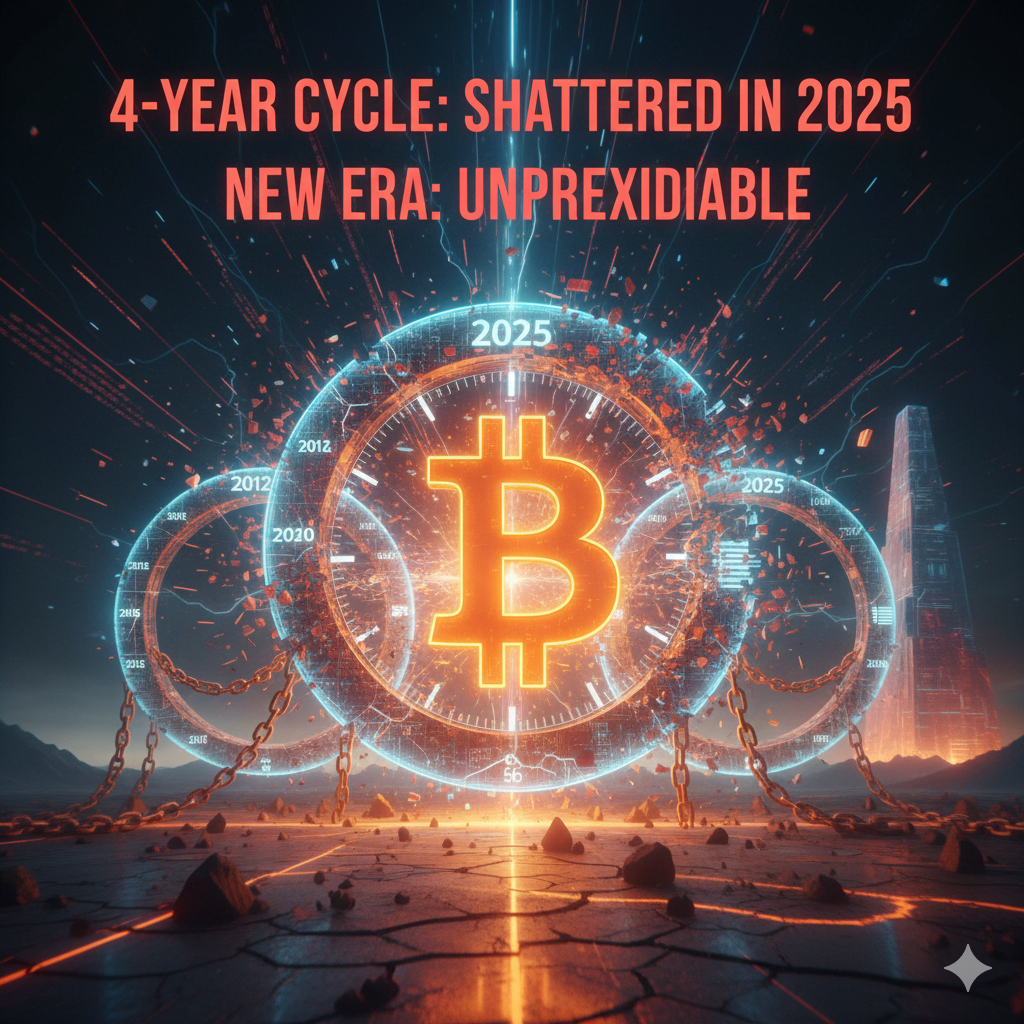
A Historic Pattern Breaks: Is the Bitcoin Halving Cycle Dead?
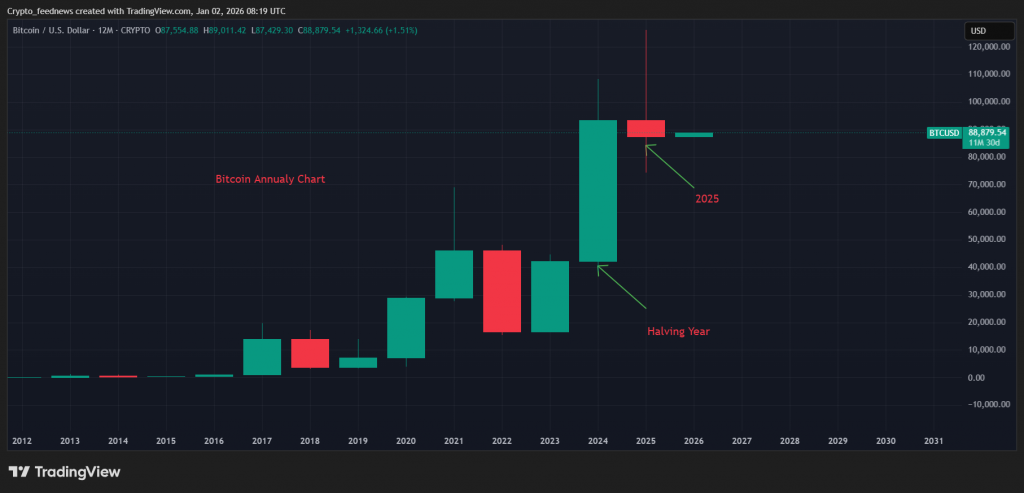
For over a decade, a sacred pattern held firm. After each Bitcoin's 4-Year Halving Cycle, the price would surge to a new high by year’s end. This happened in 2013, 2017, and 2021. However, history just ripped up the script. Despite the April 2024 halving, Bitcoin is closing 2025 lower than it started—marking the first broken post-halving year ever.
The numbers don’t lie. Bitcoin is currently trading around $88,000, down over 30% from its October 2025 all-time high of $126,080. This isn’t a minor deviation; it’s a fundamental shift in market behavior. So, what does this mean for the beloved four-year cycle thesis that has guided countless investment strategies?
Analysts Debate the Fate of the Bitcoin Halving Cycle
The market is now fiercely divided. Prominent voices are declaring the cycle officially dead. They argue that Bitcoin now trades on macro factors like liquidity and interest rates, not a predictable halving calendar. The influx of ETFs and institutional capital has changed the game entirely. These new players aren’t hype-driven retail; they’re analyzing balance sheets and Fed policy.
However, other experts contend the cycle isn’t dead—it’s just maturing. They suggest the core supply shock of the halving still matters profoundly, but its price impact is now stretched over a longer, more complex timeline. The effect is diluted by sophisticated miner financing and massive amounts of illiquid, long-term holding.
My Thoughts
This is a monumental shift, not a mere anomaly. While the halving’s supply shock remains a cornerstone of Bitcoin’s value proposition, expecting a simplistic, calendar-based pump is now naive. The market has graduated. Trading will require a dual lens: respecting Bitcoin’s unique scarcity schedule while simultaneously navigating global macro currents. The cycle isn’t dead; it’s grown up and gotten a lot more complicated.