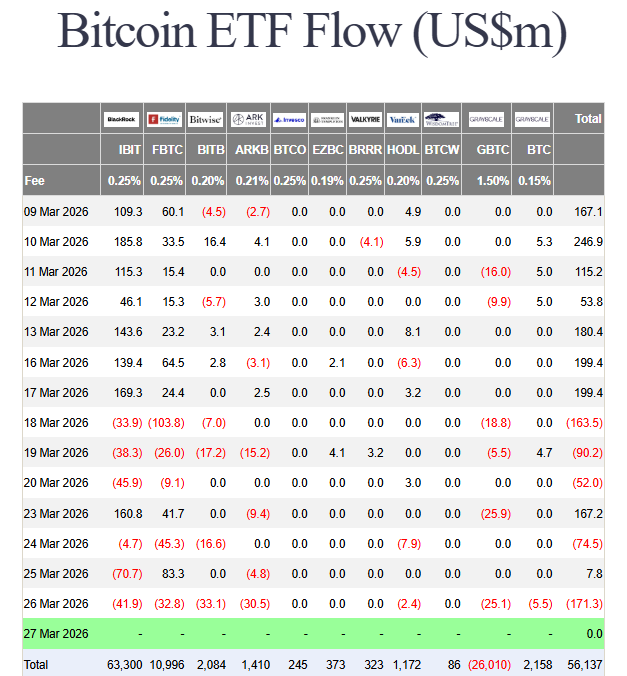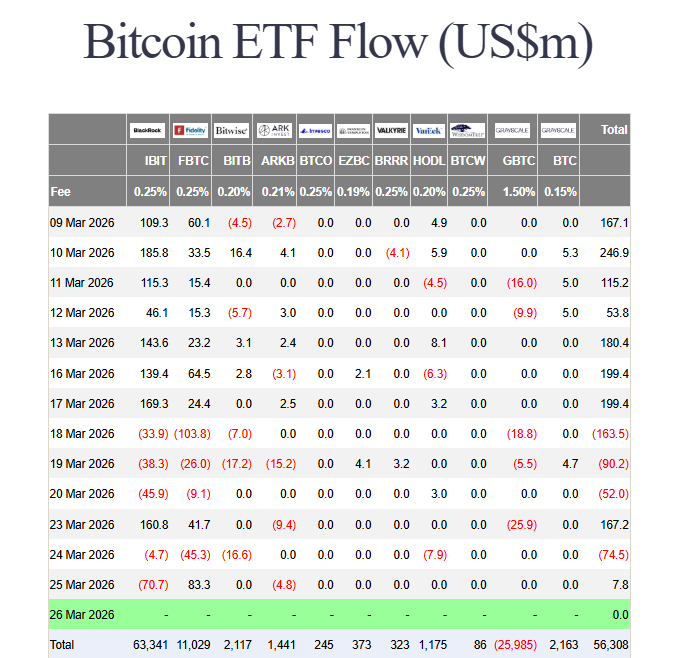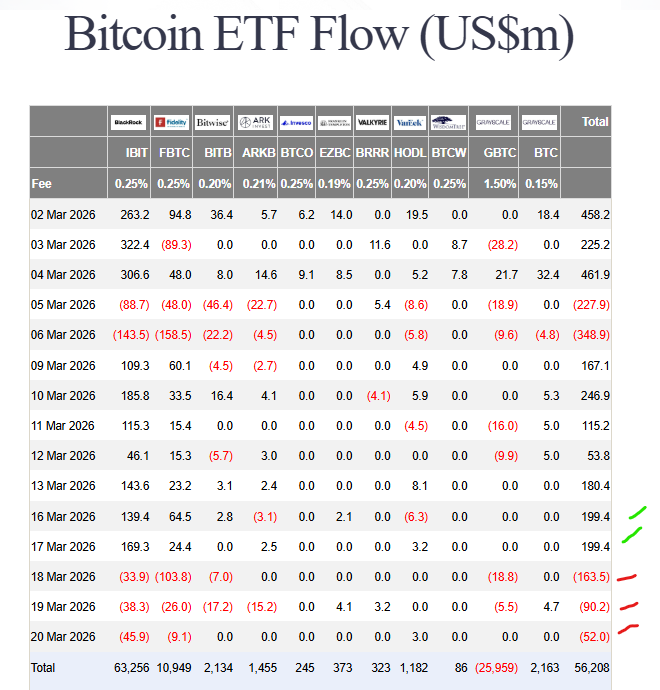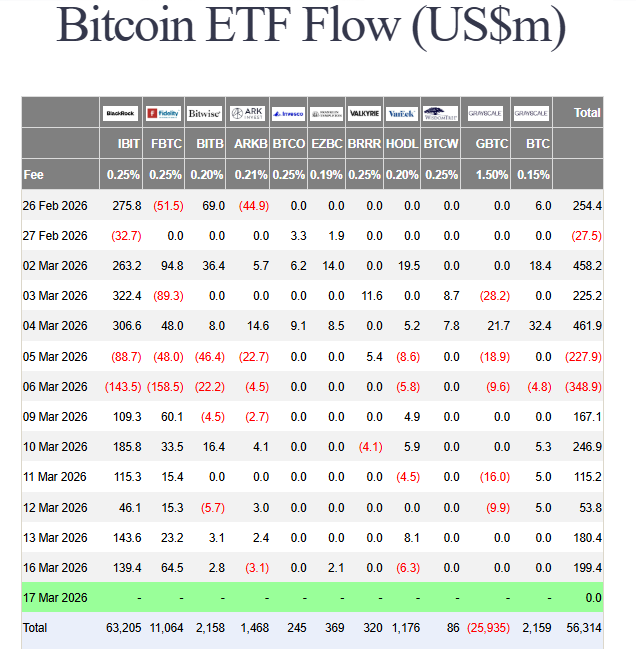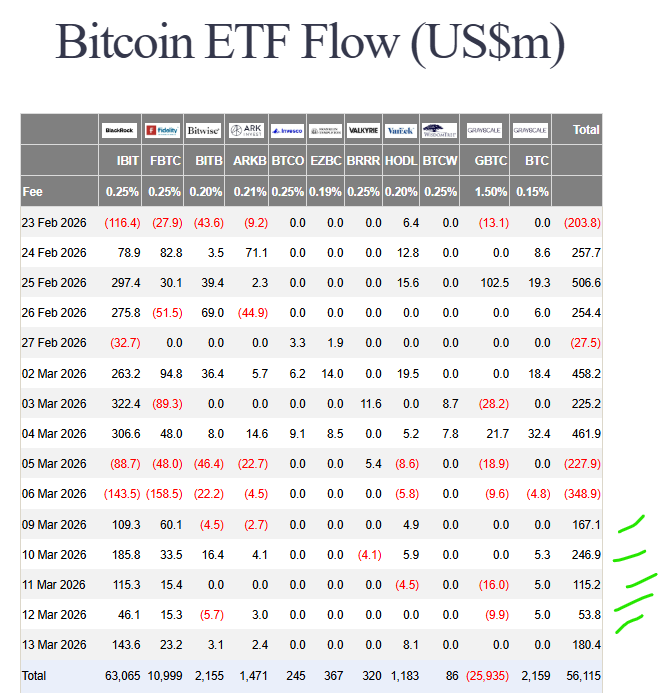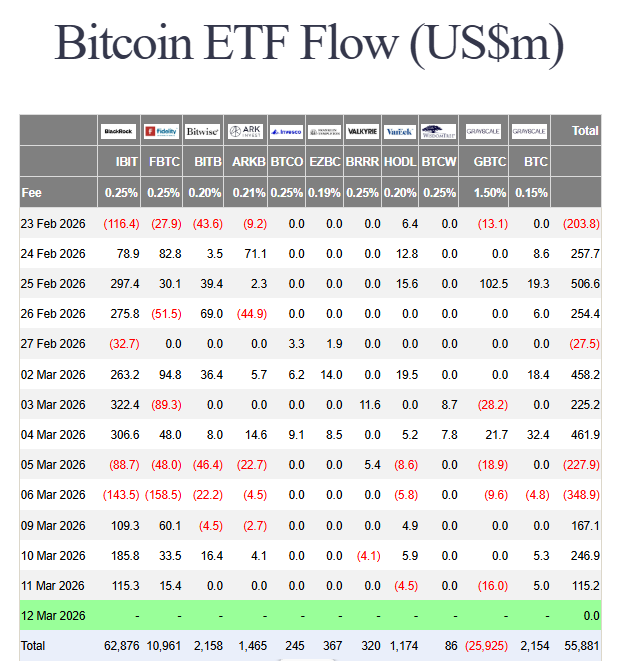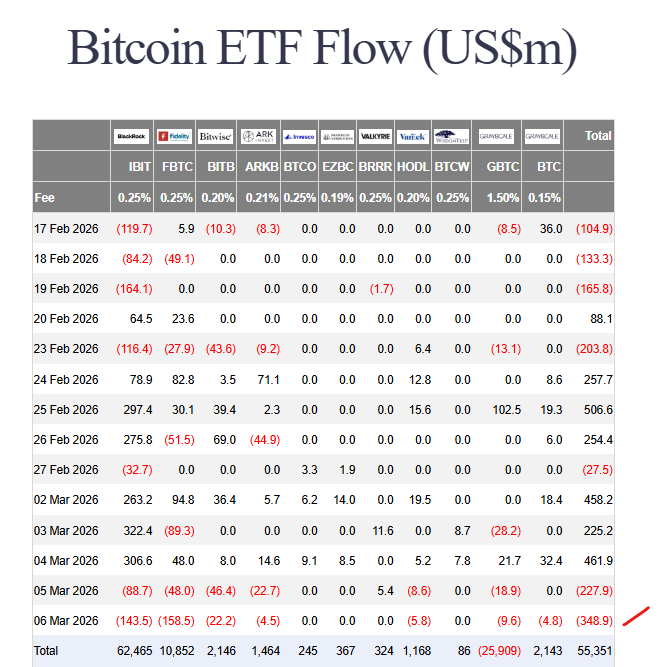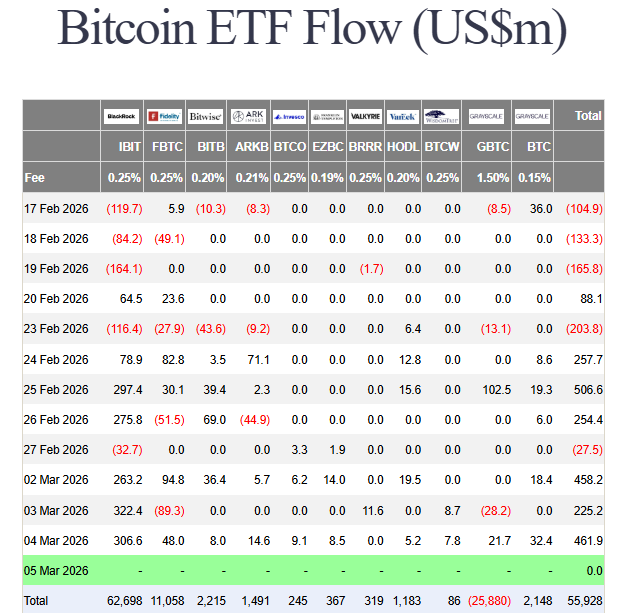


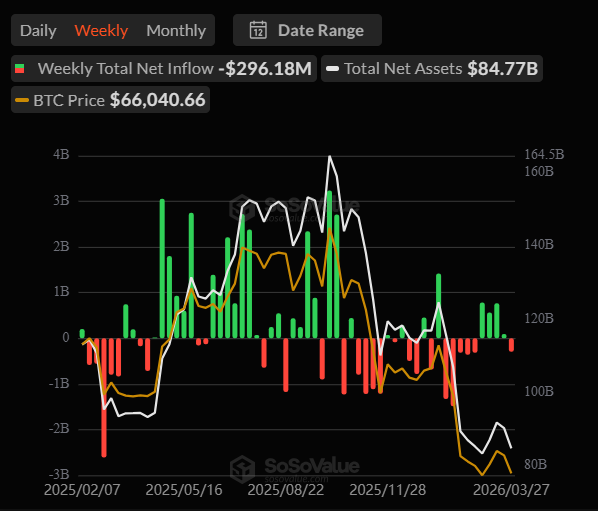
The hot streak is over. Bitcoin ETF outflows reached $296.18 million for the week ending Friday, snapping a four-week inflow run that brought in more than $2.2 billion . The reversal follows back-to-back daily withdrawals totaling over $396 million , with Friday alone seeing $225.48 million leave the funds.
Bitcoin ETF Outflows: The Numbers
The weekly numbers tell the story:
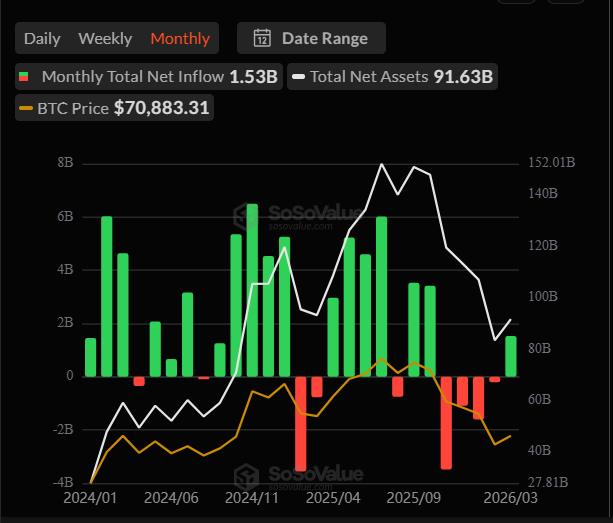
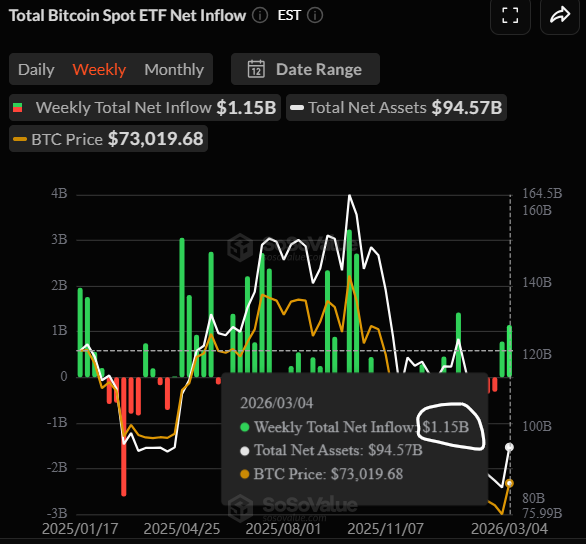
- Four-week inflow streak ends after adding $2.2B across March
- $296M outflows this week, led by heavy redemptions Thursday and Friday
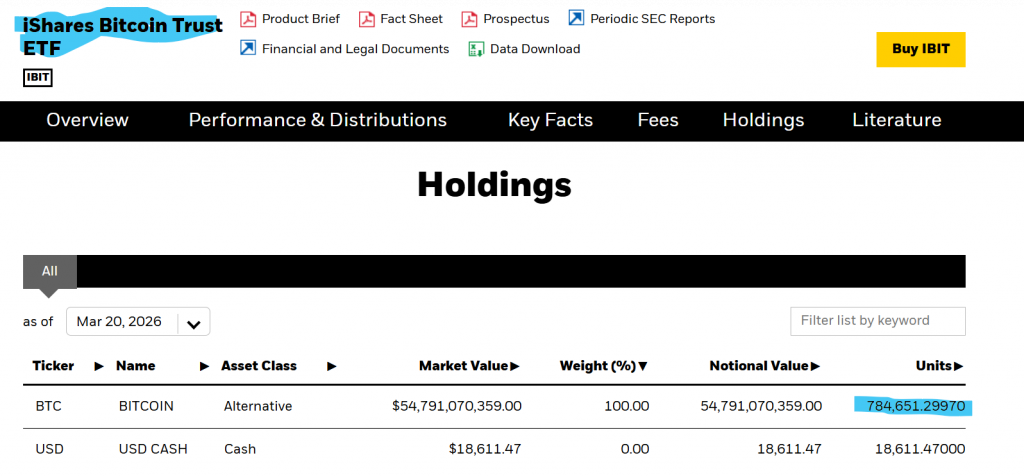
- Total net assets slipped to $84.77B from over $90B a week earlier
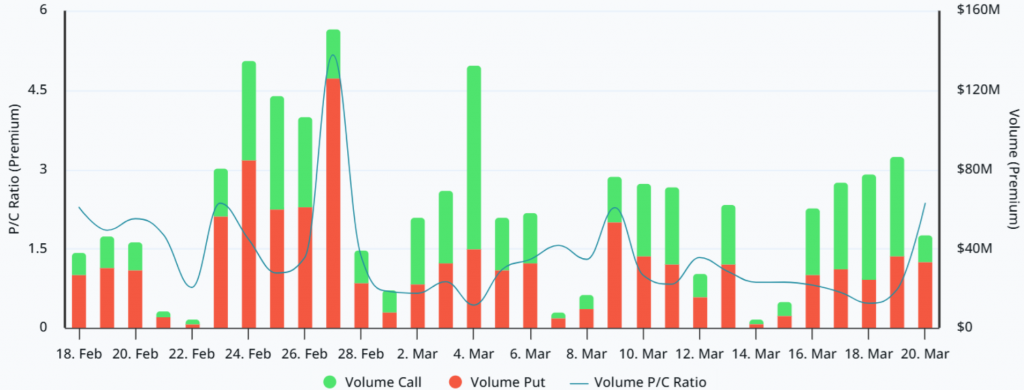
- Trading volume fell to $14.26B from $25.87B earlier in March
Despite the outflows, cumulative net inflows still stand at $55.93B since launch. Bloomberg analyst Eric Balchunas noted the funds are just “one good day away” from flipping year-to-date flows positive .
Why the Sudden Reversal?
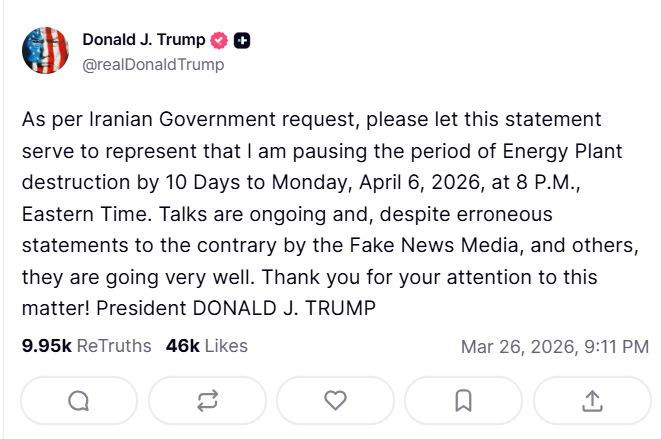
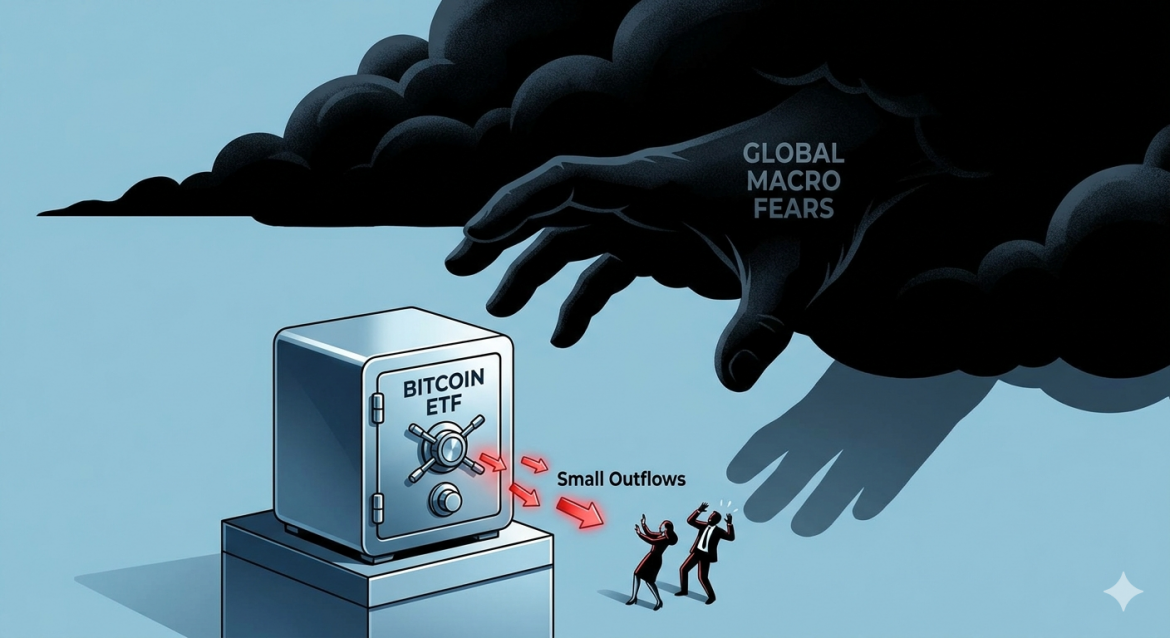
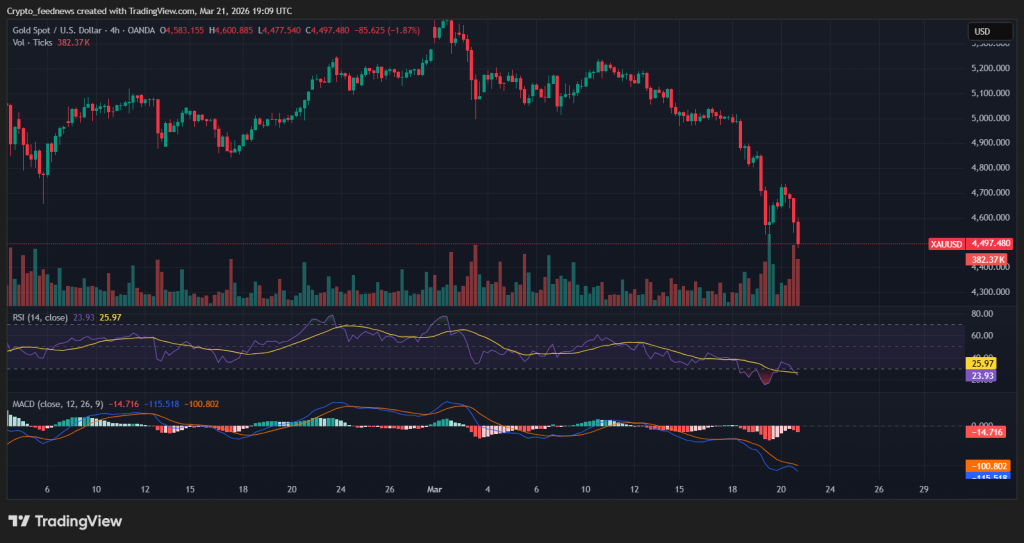
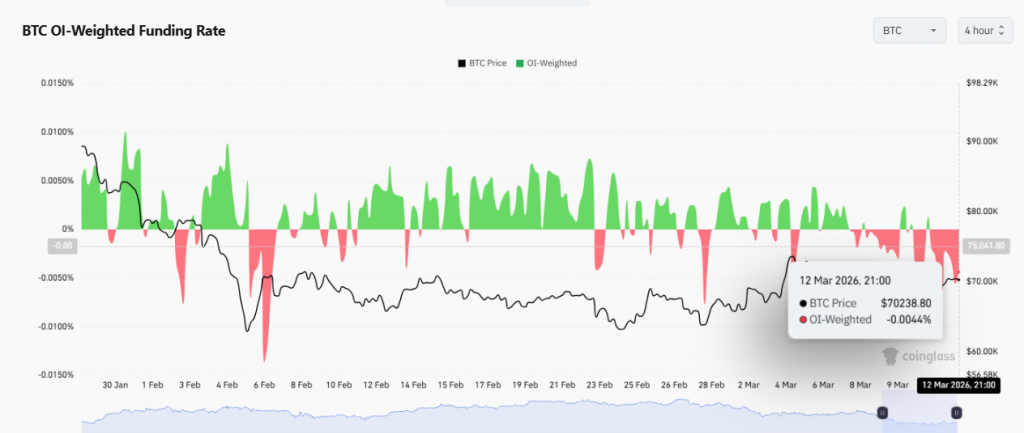
Investors are reducing risk ahead of the weekend. The US is sending troops to the Middle East, and markets fear another escalation in the US-Iran conflict . A Bitunix analyst described the current macro backdrop as “surface stability, internal imbalance” .
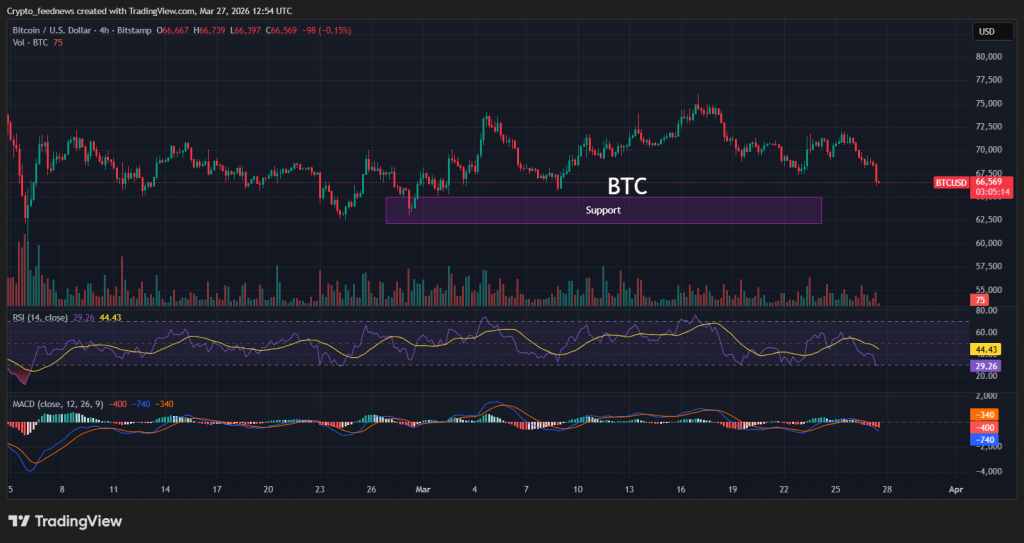
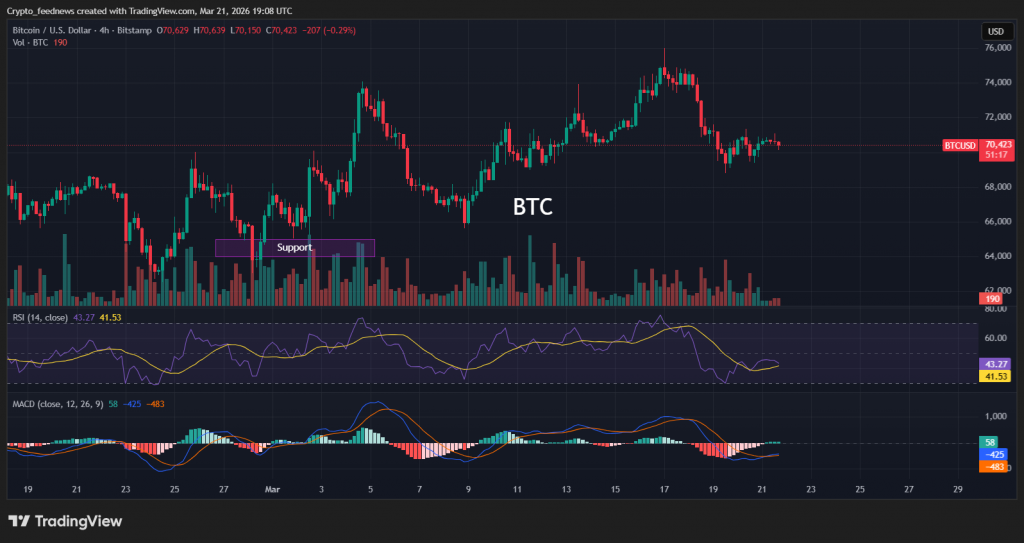
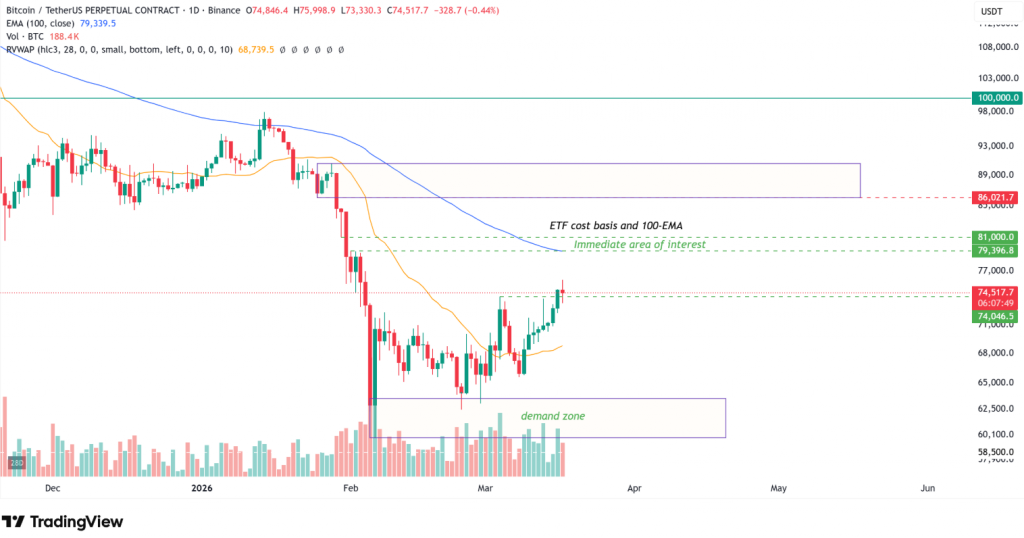
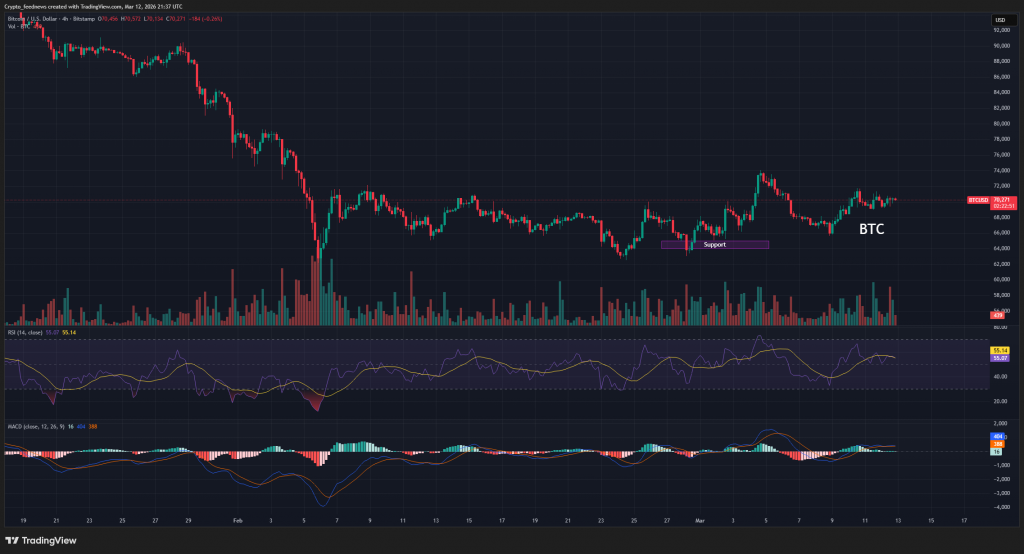
Bitcoin is now range-bound between $65,000 and $72,000 . The analyst said capital is “not exiting the market, but neither is it willing to take directional risk” .
Ethereum ETFs Keep Bleeding
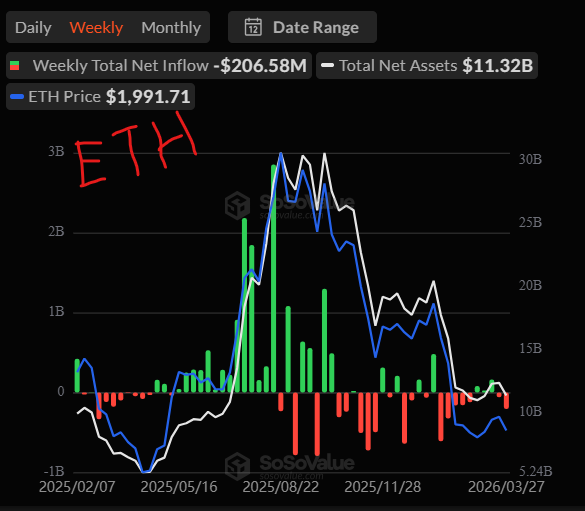
Spot Ether ETFs recorded $206.58 million in weekly outflows , marking a second consecutive week of losses . Funds saw redemptions every trading day since March 18.
My Thoughts
Bitcoin ETF outflows are a clear sign that institutional money is nervous. The $2.2 billion inflow streak was real, but it couldn’t survive the latest geopolitical headlines. Investors are pulling back, not exiting.
The good news? The outflows are still small compared to March’s inflows. The funds are one good day away from turning positive on the year. But until the Middle East situation stabilizes, expect more chop.
The $65,000–$72,000 range is the battleground. A break above $72K would bring the bulls back. A break below $65K would test institutional patience.