


Uniswap is at it again—rewriting the DeFi playbook. The Uniswap fee switch vote kicks off tomorrow, February 27, and runs through March 1, and it’s a big one. If passed, the proposal will expand fee sharing to eight additional Layer 2 networks, potentially adding $27 million in annualized revenue to UNI holders through token burns. This is Phase 2 of Uniswap’s master plan to turn protocol usage into direct token value .
The Uniswap Fee Switch Vote: What’s Being Proposed
The governance proposal would activate the fee switch on Base, OP Mainnet, Arbitrum, Celo, Soneium, Worldchain, X Layer, and Zora. Both V2 and V3 versions on these chains would contribute fees. Here’s how it works: fees collected on each chain flow into a “TokenJar” smart contract, then get bridged back to Ethereum mainnet for UNI burns. No more manual pool-by-pool activation—this system is automated and comprehensive .
The estimated impact? Roughly $27 million in annualized revenue on top of the $34 million already being burned from existing fee mechanisms. Combined, that’s serious token supply reduction .
Why This Matters for UNI Holders
Uniswap already generates over $938 million in annualized fees across its ecosystem. With this expansion, the link between platform volume and UNI value tightens further . The protocol returned to net profitability in Q1 2026, logging $2.75–$3.12 million in gross profit after multiple quarters in the red .
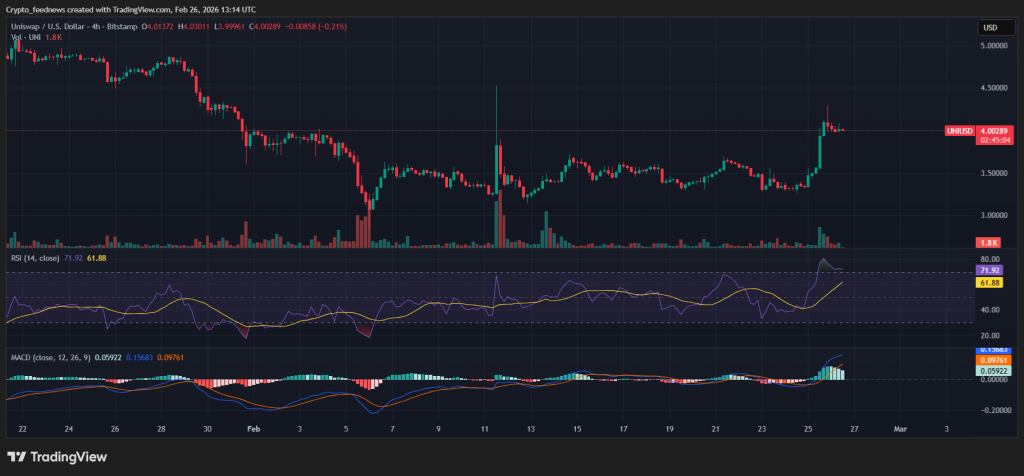
Market reaction was immediate: UNI surged 15% to a one-week peak above $4, outpacing both Bitcoin and Ethereum .
My Thoughts
This Uniswap fee switch vote represents a structural shift in DeFi tokenomics. Uniswap is transforming from a governance-only token into a cash-flow-backed asset. The expansion to L2s is critical—that’s where the volume is growing fastest.
The $27 million estimate is conservative. If L2 adoption continues accelerating, actual revenue could blow past projections. The burn mechanism creates a deflationary feedback loop: more volume = more fees = more burns = higher UNI value.
Risks? Fee-sensitive traders might migrate to cheaper alternatives, but Uniswap’s liquidity moat is formidable. For now, the market is voting with its feet—15% pumps don’t happen without conviction.