

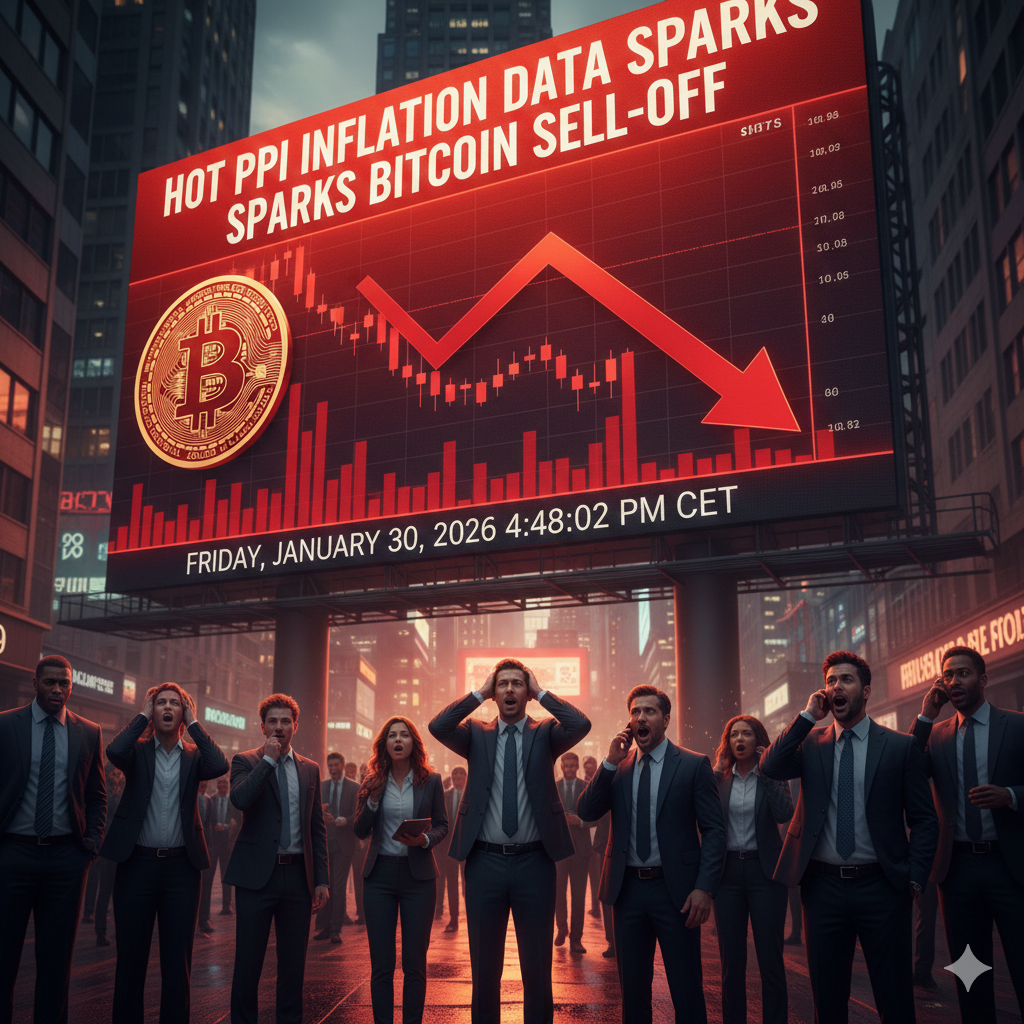
The inflation fight is far from over, and crypto just felt the heat. Newly released U.S. Producer Price Index PPI Inflation data for December smashed expectations, coming in significantly hotter than forecast. This immediately sent Bitcoin into a tailspin, erasing its earlier gains and reinforcing fears that the Federal Reserve will keep rates higher for longer.
Breaking Down the Hot PPI Inflation Data
The numbers delivered a one-two punch. Headline PPI rose 3.0% year-over-year, well above the 2.7% forecast. More alarmingly, the core PPI (excluding food and energy) jumped 0.7% month-over-month, triple the expected 0.2% increase. This data signals that inflationary pressures are persisting deeper in the production pipeline, which often translates to future consumer inflation.
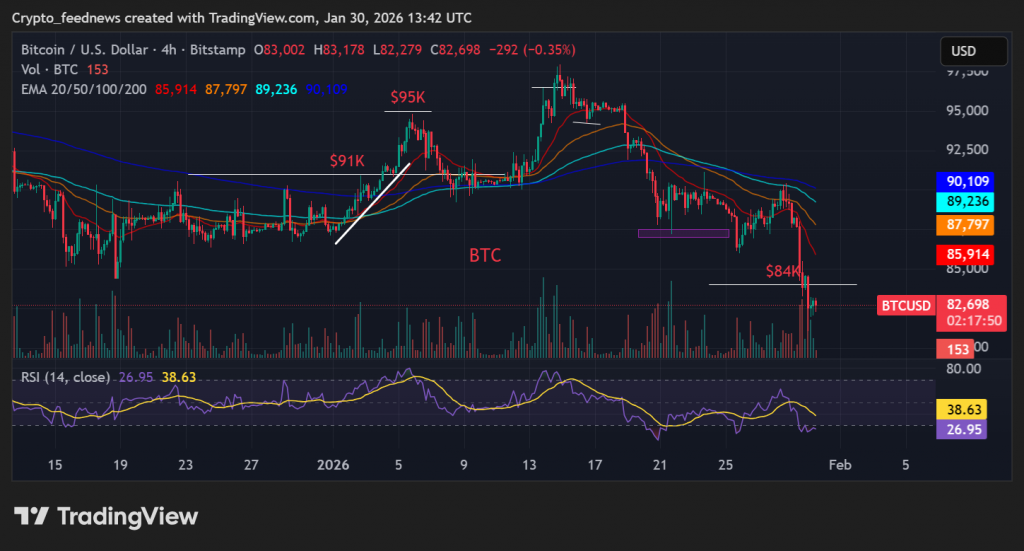
Bitcoin’s reaction was swift and negative. After briefly climbing near $83,000 earlier in the day, BTC quickly reversed and fell toward $82,000, hitting a new yearly low. This drop underscores crypto’s current sensitivity to macro data and its role as a liquidity barometer.
Fed Policy Implications: Rate Cuts on Hold?
This report strengthens the hand of Fed officials advocating for patience. Following last week’s elevated PCE reading, the hot PPI inflation data gives the Federal Reserve more reason to delay rate cuts, potentially through the first half of 2024. While Governor Chris Waller made a public case for cuts due to labor market weakness, the prevailing narrative is now shifting toward sustained caution.
The market is now repricing the timeline for monetary easing. This environment of “higher for longer” rates traditionally pressures risk assets like Bitcoin, as it tightens financial conditions and boosts the value of the dollar.
My Thoughts
This is a classic macro-driven flush. The PPI inflation data confirms the market’s worst fear: the path to 2% inflation will be bumpy. While painful in the short term, this repricing is healthy. It shakes out weak leverage and resets expectations. For long-term Bitcoin investors, this volatility is a feature, not a bug. It creates opportunities to accumulate at lower prices before the eventual Fed pivot, which will come—just later than many hoped. Watch for a stabilization around key support levels; the fear is palpable, but that’s often when opportunities are born.