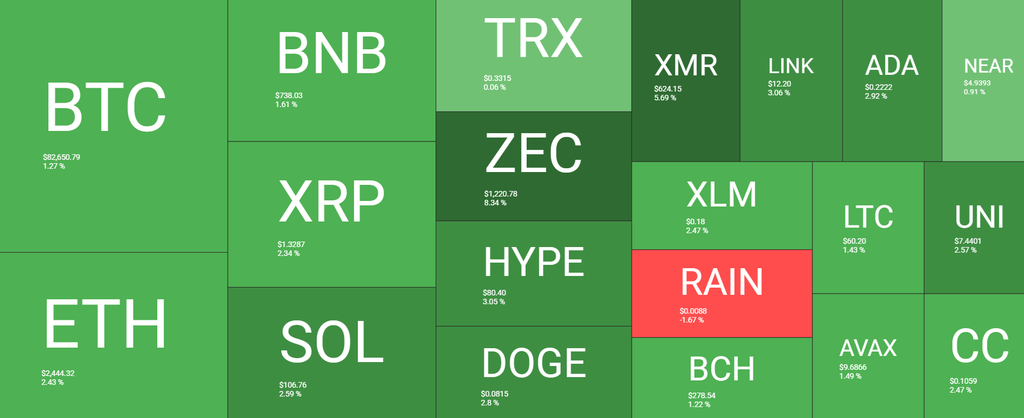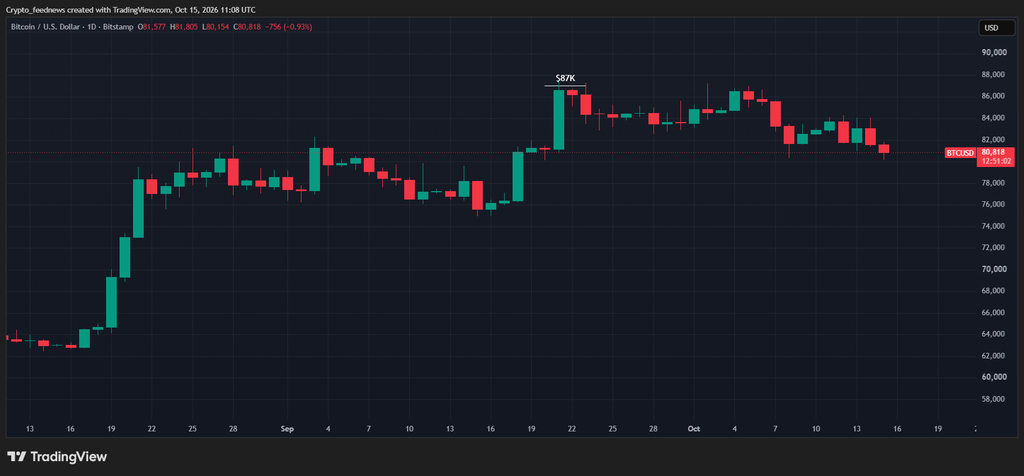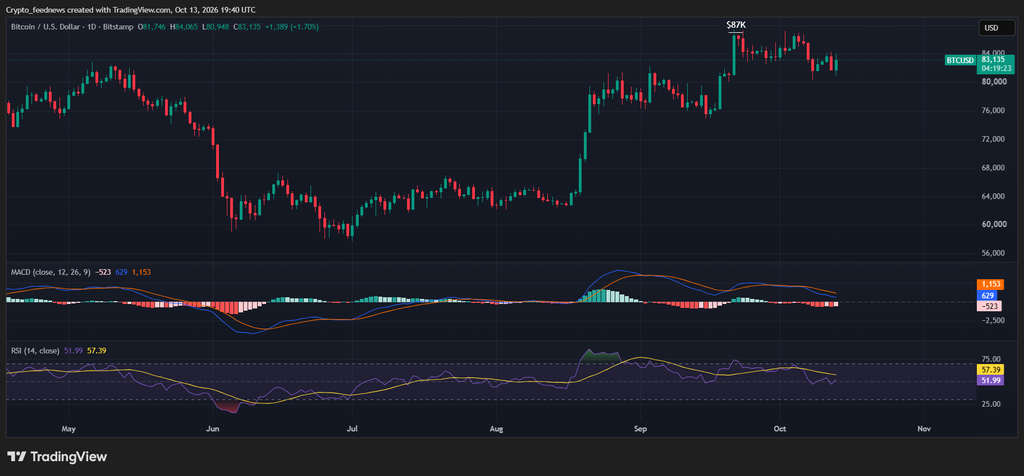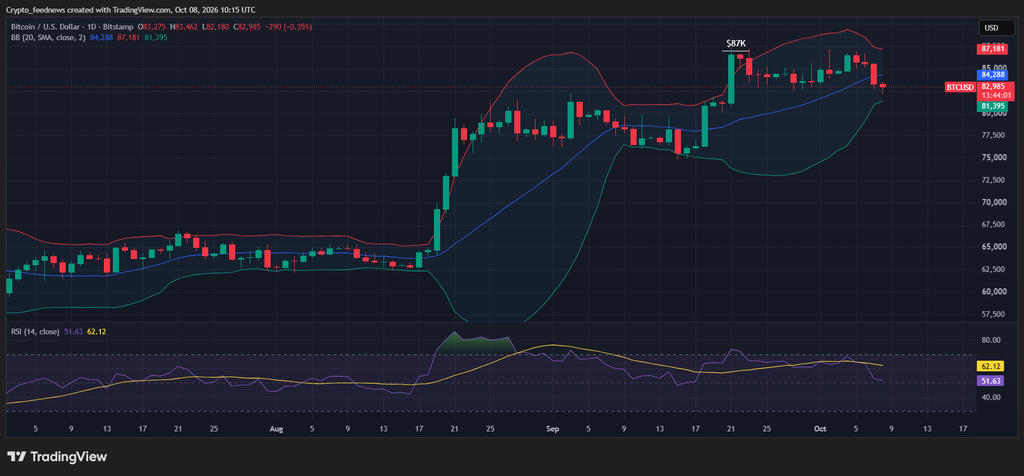

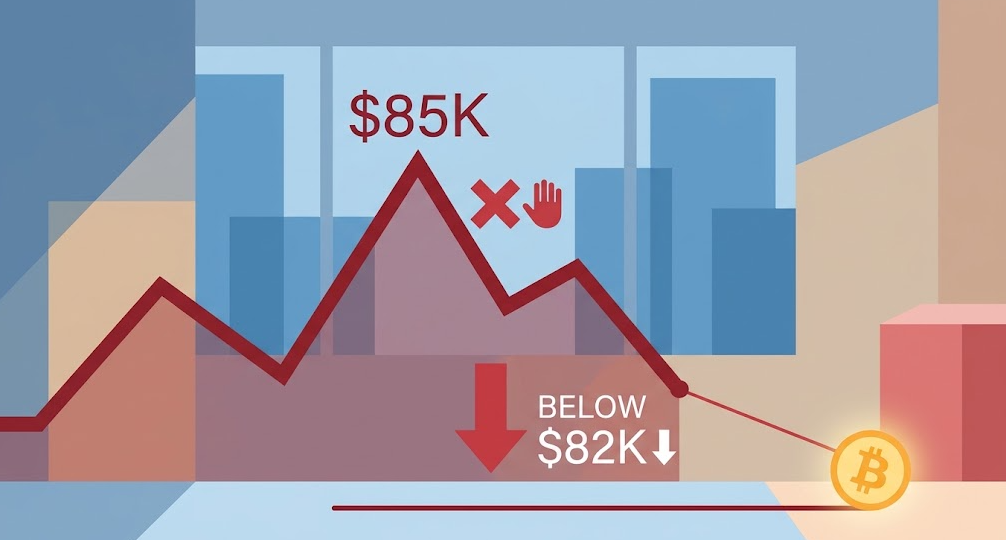
Bitcoin price falls below $82K on October 23. Specifically, it declined 0.97% to $81,449.88. Renewed selling followed its rejection near $85,000.
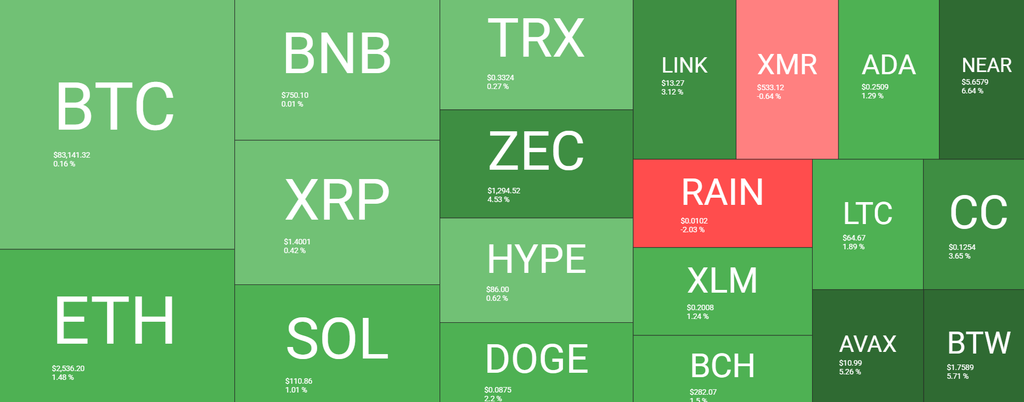
According to TradingView data, daily trading volume reached about $29.85 billion. Meanwhile, market cap stood near $1.64 trillion. The decline followed an intraday slide toward $80,989. Ether, XRP, Solana, and Dogecoin faced similar pressure.
Why Bitcoin price falls below $82K today
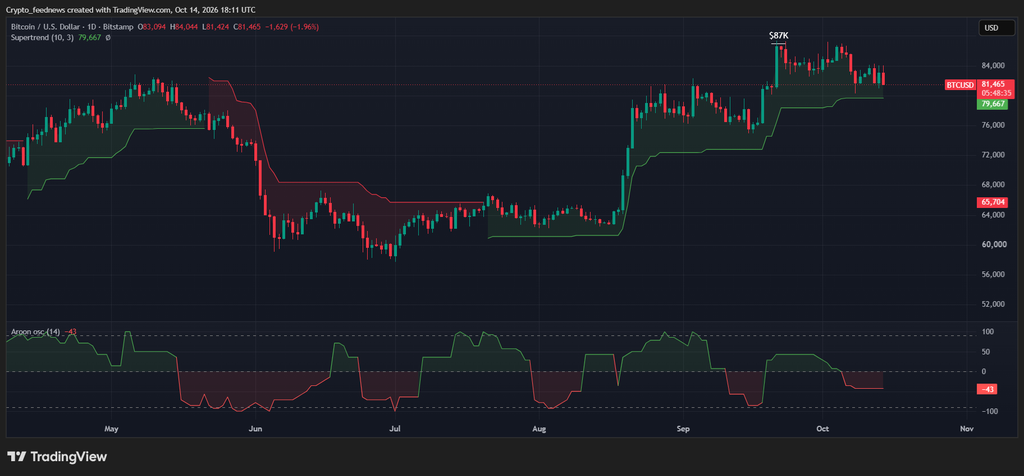
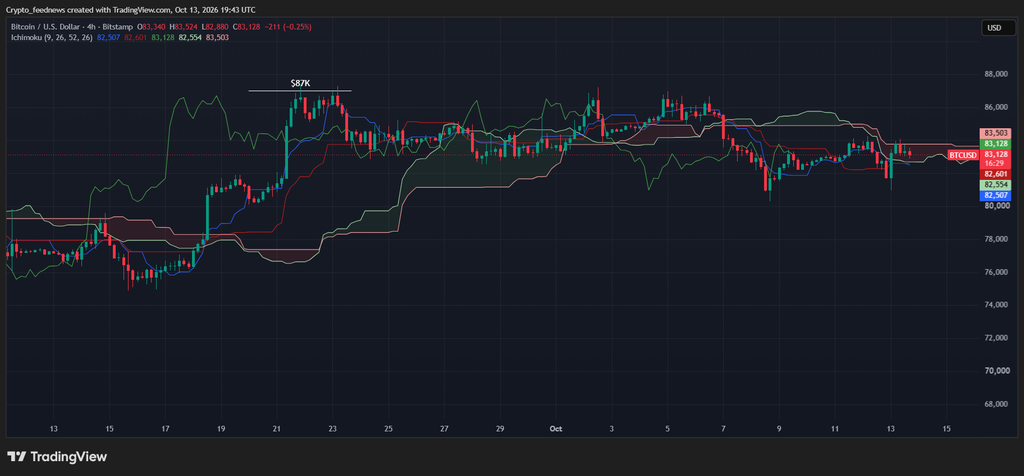
Bitcoin failed to sustain a recovery above $84,000. After reaching about $84,778, BTC surrendered its gains. It briefly traded below $81,000. Consequently, the $80,000 support area came back into focus.
ETF outflows reverse recent inflows
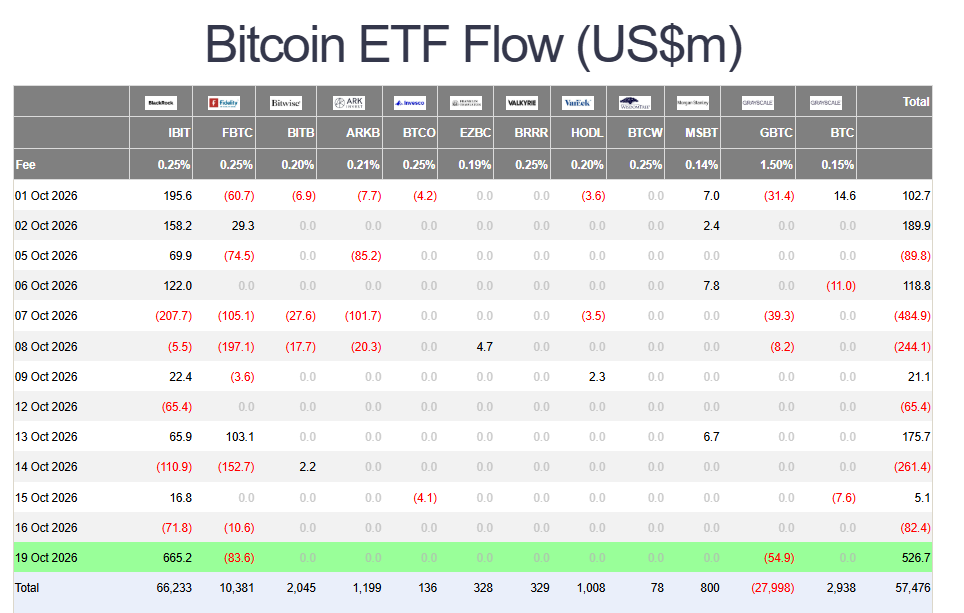
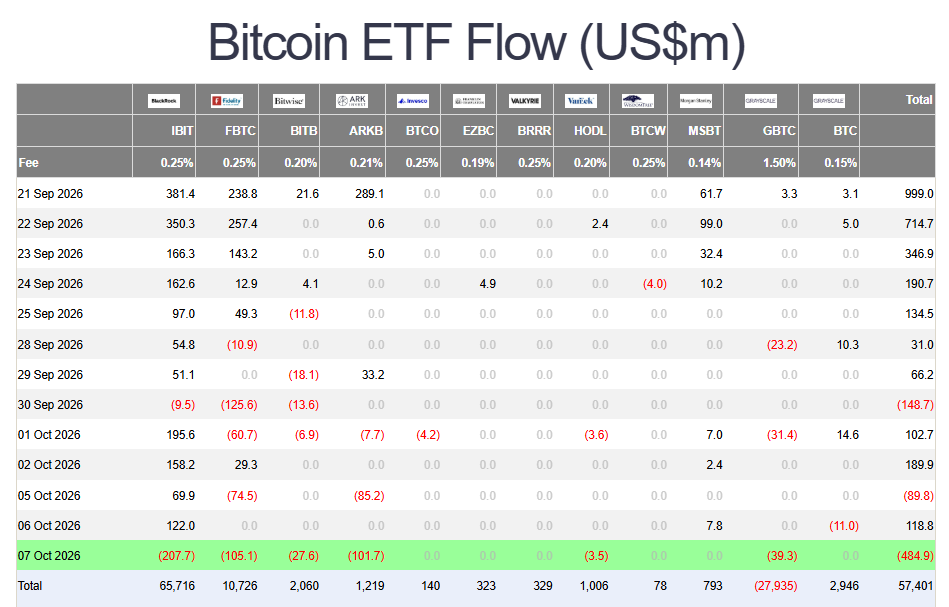
US spot Bitcoin ETFs recorded $635.49 million in net outflows on October 22. SoSoValue data confirms this. The outflows ended three straight sessions of inflows totaling about $1.08 billion.
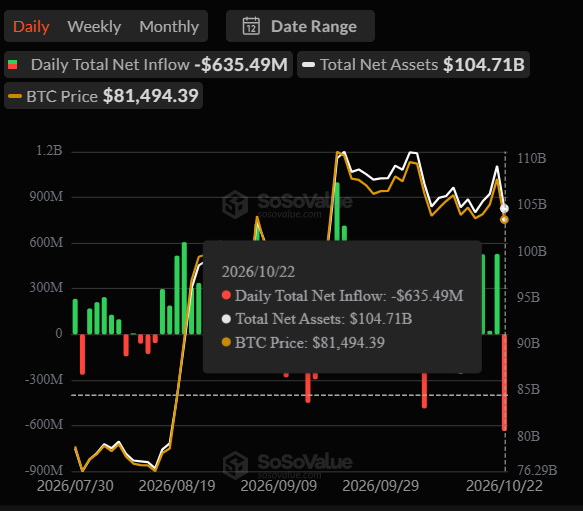
The inflow streak began with $526.6 million on October 19. It continued with $23.16 million on October 20. On October 21, the funds attracted about $528.4 million.
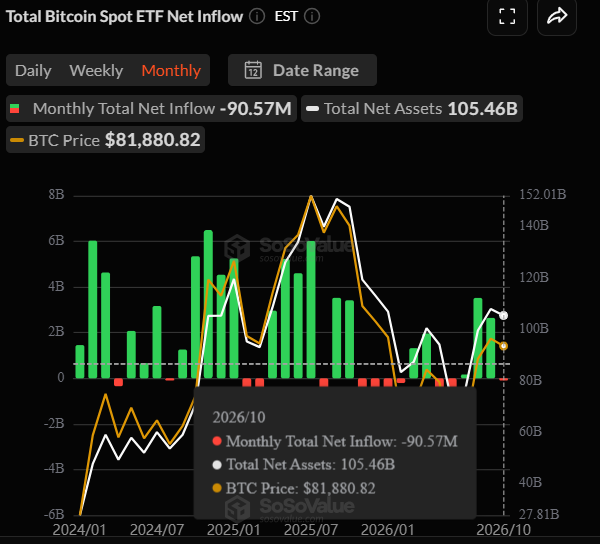
The October 22 withdrawals were the largest since June 25. The reversal brought October’s cumulative net flows to about $174.5 million in withdrawals.
Bitcoin liquidations rise amid macro pressure
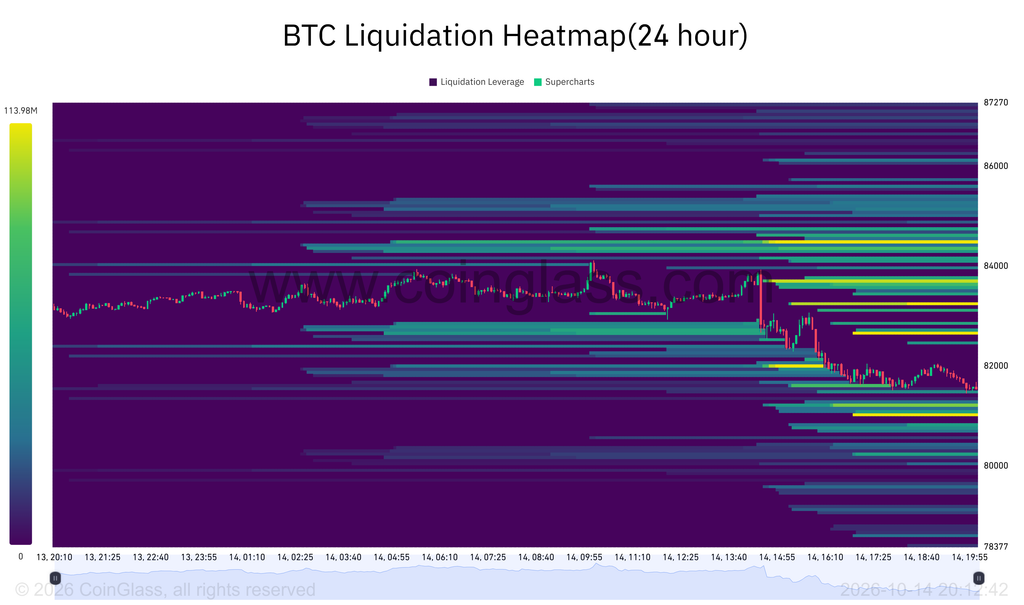
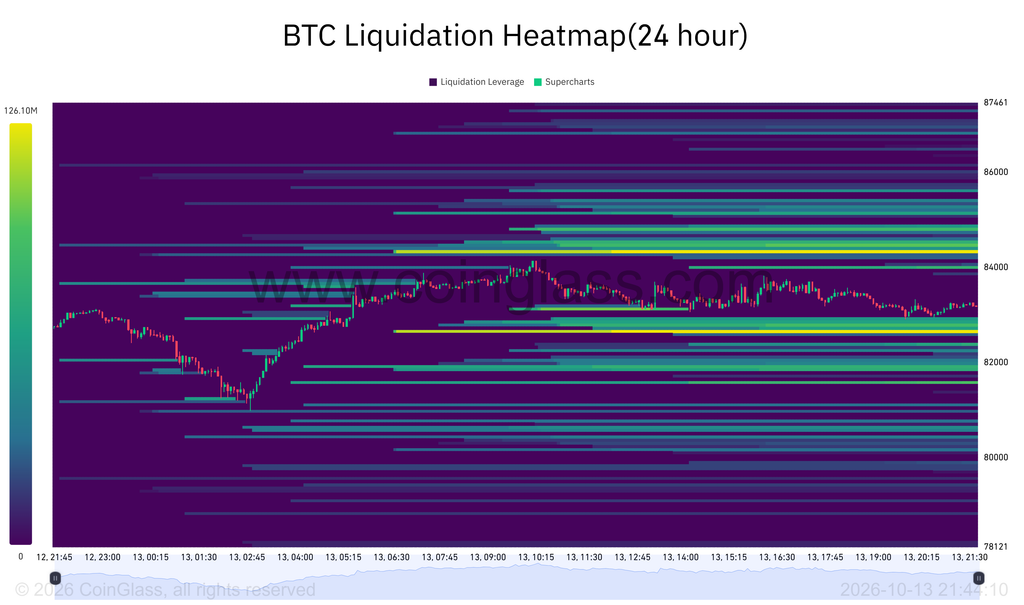
The crypto market saw substantial derivatives liquidations. CoinGlass data shows exchanges liquidated about $388.76 million in positions. That affected around 89,600 traders over 24 hours.
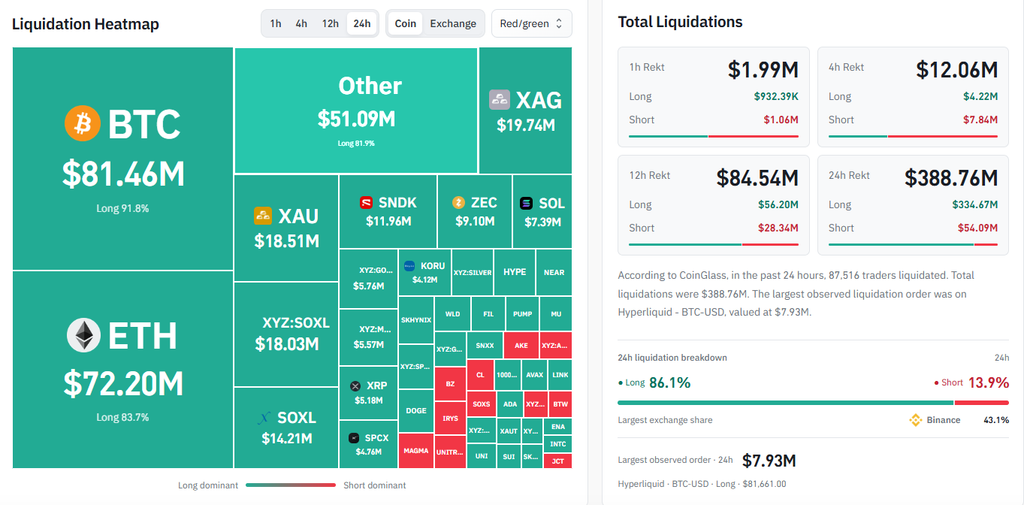
The largest single liquidation occurred on Hyperliquid. It involved a BTC-USD position worth $7.93 million.
Macro concerns complicate the recovery. Analyst Darkfost highlighted rising oil prices. Brent crude traded above $100 amid Gulf tensions. He argued that sustained energy costs could pressure inflation and liquidity. However, he cautioned against assuming direct causation.
Bitcoin price prediction: can BTC recover above $82,500?
Bitcoin’s daily chart shows a struggle to recover. At a reading of $81,906.77, BTC remained below the Keltner middle band at $82,445. The lower boundary sits at $78,323.
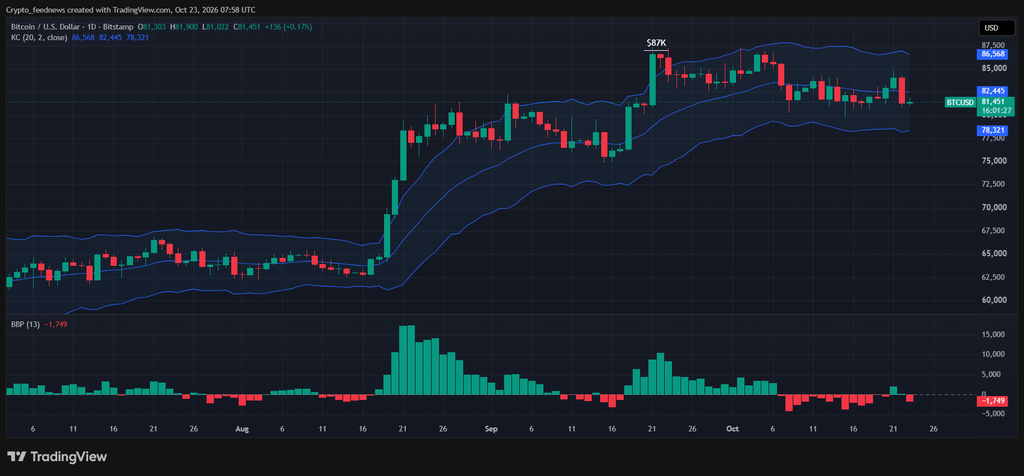
A sustained move above $82,559 could improve momentum. It could bring the upper channel near $86,568 into view. Failure to reclaim that level would expose $80,000 again.
The Bull Bear Power indicator stood at -1,754. That shows sellers retain the advantage. However, negative histogram bars began contracting. Therefore, bearish momentum is moderating.
Analyst Michaël van de Poppe identified $82,900 as a level to invalidate the downward pattern. He highlighted $78,400–$79,700 as another area to watch.
Key levels to watch
Resistance sits at $82,559 and $82,900. Support sits at $81,000 and $80,000. A break below $80,000 could target $78,400. Therefore, traders should watch those levels closely.