

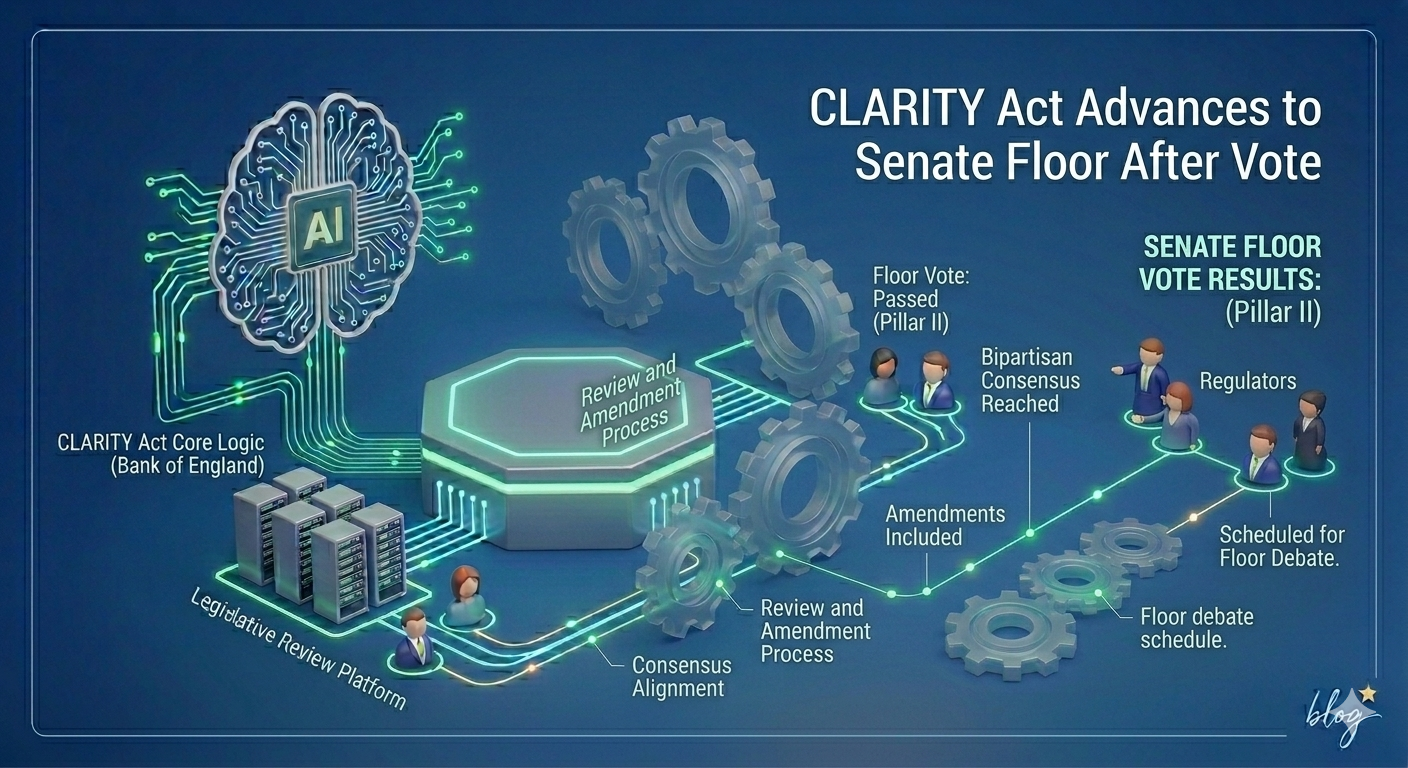
CLARITY Act advances to Senate floor after a key committee vote. On Thursday, the Senate Banking Committee voted 15 to 9 in favor of advancing the crypto bill.
This marks a major win for the crypto industry. The bill is now one step closer to becoming law.
Senate Banking Committee votes in favor
The vote received bipartisan support. Two Democratic Senators, Ruben Gallego and Angela Alsobrooks, voted in favor.
Before the vote, members debated proposed amendments. Anti‑crypto Senator Elizabeth Warren criticized the bill heavily. She called it “a bill for the crypto industry, by the crypto industry.” Warren also said the bill was not a priority and would only enrich crypto stakeholders.
Furthermore, Warren claimed the CLARITY Act would enable more fraud within the crypto ecosystem. She proposed amendments to block the Fed from issuing master accounts to crypto firms.
However, pro‑crypto Senator Cynthia Lummis countered these points. She noted that the regulation includes provisions to curb illicit activity. Lummis also said the bill promotes financial freedom and American innovation. Republican Senator Thom Tillis backed Lummis, noting that law enforcement groups support the bill.
Failed amendment on ethics
A proposed ethics provision came up during the hearing. Senator Chris Van Hollen wanted to prohibit the President, Vice President, members of Congress, senior officials, and their families from owning, promoting, or affiliating with crypto issuers or platforms. The amendment failed on a partisan vote.
What’s next for the crypto bill?
Now that CLARITY Act advances to Senate floor, the next step is a merger. The Senate will combine this bill with the Senate Agriculture Committee’s Digital Commodity Intermediaries Act (DCIA), which advanced in January. The DCIA focuses on how the CFTC will regulate crypto commodities.
After the merger, Majority Leader Senator John Thune will schedule floor time. This opens the bill to floor debate. Then, the bill needs a simple majority to advance. However, it would need 60 votes to invoke cloture and end debate.
Meanwhile, the U.S. House must deliberate on the Senate‑passed version. The House passed its own version last year. After reconciling the two versions, both chambers must approve the final bill. Then it heads to President Donald Trump’s desk for his signature.