


The Aptos Foundation just made a major commitment. It will pour $50 million into Aptos development.
The main focus? AI agent infrastructure and research.
Why does this matter? Because autonomous agents are already transacting onchain at incredible speeds. No human can match their frequency.
Aptos invests $50 million in AI agents to enable sub‑second finality
According to the Aptos Foundation, building infrastructure with sub‑second finality is key. This must happen without human intervention.
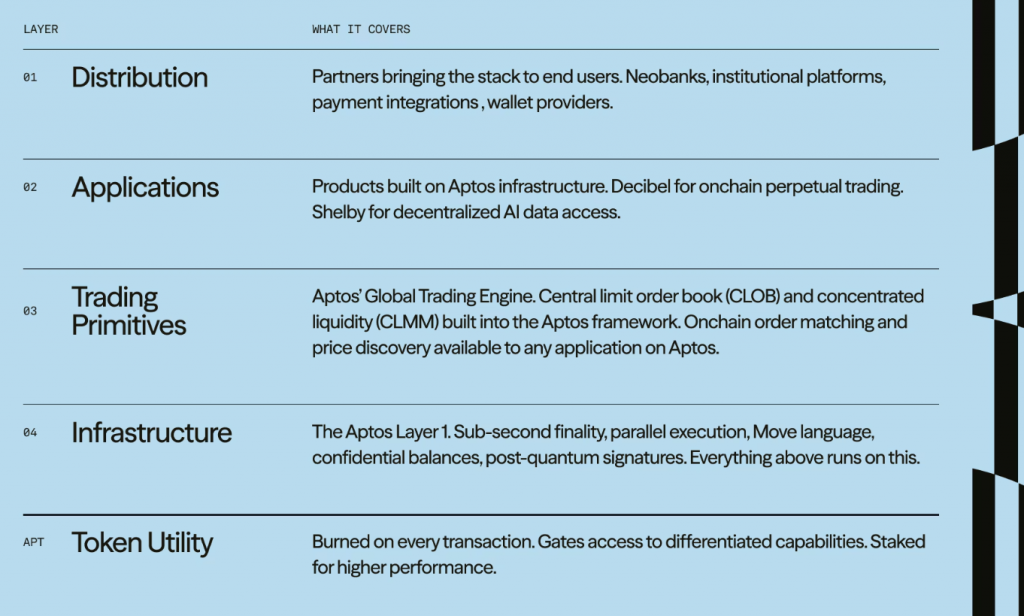
The goal is to support the next wave of AI agent adoption.
Two products already shipped last year to meet rising demand. First, Decibel. It is an AI‑powered onchain order book and perpetuals exchange that launched on the Aptos mainnet in February.
Second, Shelby. This is a decentralized storage protocol designed to support the workloads of AI agents.
The Aptos Foundation explained: “Autonomous agents are already transacting onchain at frequencies no human can match, routing to whatever venue is fastest, most consistent, and least gameable.”
Why AI agents need better infrastructure
Aptos joins a growing list of crypto protocols. All of them are seeking opportunities in the agentic AI economy.
Aptos said there is a clear need. Build infrastructure that offers sub‑second finality transactions. Also build systems that “run 24/7 with no human to escalate to.”
What can AI agents do? They act as personal assistants for people, both at home and in the workplace. For example, they can book a flight, make a shopping purchase, or execute a high‑level trade onchain.
Industry leaders predict massive growth
Last month, Coinbase CEO Brian Armstrong made a bold prediction. He said there will be “more AI agents transacting online than humans very soon.”
Circle CEO Jeremy Allaire echoed this in January. He said “literally billions of AI agents” will be transacting onchain in three to five years.
AI agents use stablecoins to transact
On Wednesday, Amazon Web Services integrated Coinbase’s x402 payments protocol into Amazon Bedrock AgentCore. This allows AI agents to make USDC payments and access services through AWS‑managed payment controls.
A week earlier, crypto wallet startup Oobit launched a Visa‑supported virtual card. The card lets AI agents make online purchases in USDT on behalf of businesses.
The role of the Aptos token
The foundation stated that the Aptos token will play a central role. It will be burned in transactions. It will also be required to access advanced AI agent features. Additionally, users can stake it to improve performance.
The $50 million will also develop other parts of the “Aptos stack.” That includes integrations with neobanks, institutional platforms, and wallet providers.
Furthermore, Aptos plans to work on encrypted mempools. It also wants to offer confidential perps trading.
Aptos already launched a privacy‑focused coin
On April 24, Aptos launched Confidential APT on its mainnet. This privacy‑focused coin helps fix a long‑standing trade‑off. It protects user privacy while preserving transparency for compliance.
Sherry Xiao, founding engineer at Aptos Labs, told Cointelegraph that Confidential APT could help businesses. For instance, it can hide employee salaries paid onchain. It can also conceal treasury movements, settlement flows, and trading strategies that competitors might otherwise see.