

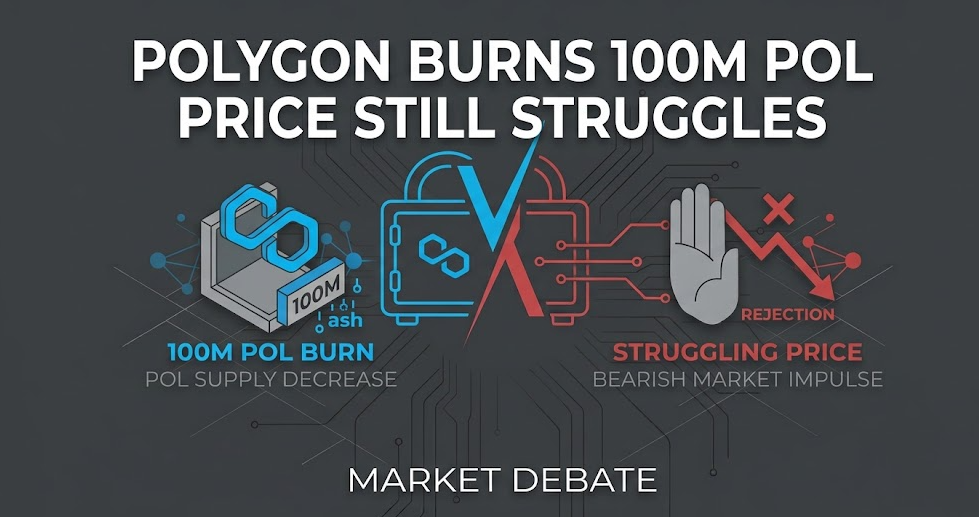
Polygon burns 100M POL, equal to about 1% of its original supply. Nevertheless, the cryptocurrency has continued to struggle. POL traded near $0.103 on October 12. It declined from about $0.12 in late September. TradingView data confirms this.
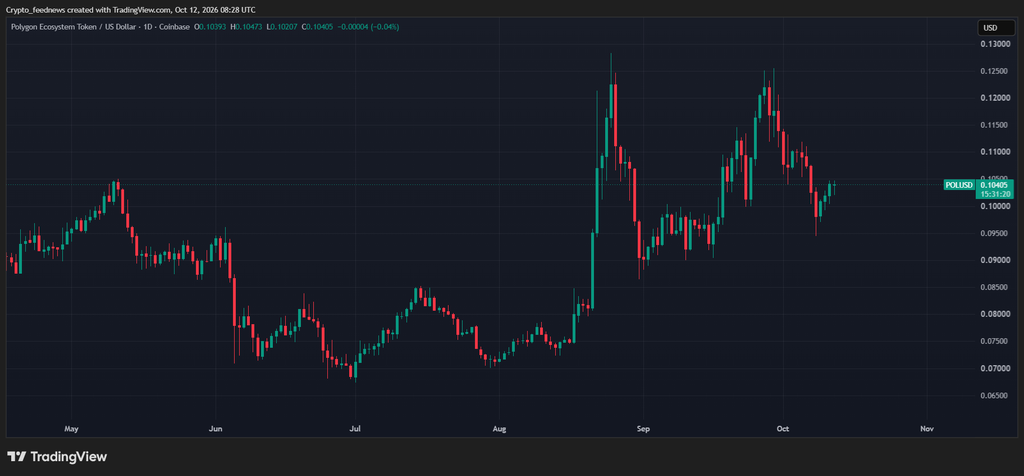
Why Polygon burns 100M POL but price stays weak
Specifically, Polygon co-founder Sandeep Nailwal posted on X on October 11. He said the network burned 100 million POL about two weeks earlier. Meanwhile, another 22 million tokens await the next burn. That equals about 0.2% of the original supply. Network fees funded the September burn. Therefore, the burn did not use Polygon Foundation treasury tokens. It permanently removed them from supply.
Why the burn has not supported POL price
Polygon’s supply reduction comes alongside ongoing token issuance. Under original tokenomics, POL launched with a 2% annual emission rate. The rate splits equally between validator rewards and the community treasury. Based on 10 billion initial tokens, that equals about 200 million POL each year. Therefore, weigh the 100 million burn against continuing issuance.
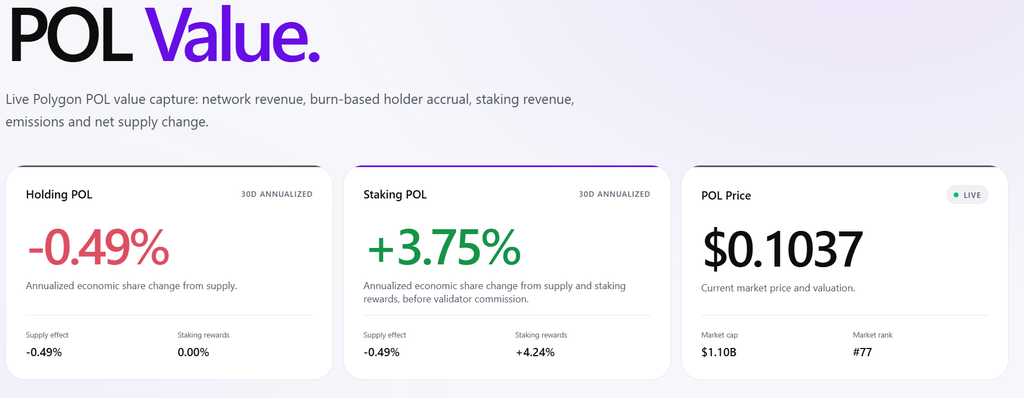
Data from POLTRACK’s dashboard shows protocol emissions. Polygon recorded about 17.45 million POL in the 30 days ending October 11. Base fees accumulated 13.23 million POL toward burning. Consequently, net supply increased by about 4.22 million POL. This occurred before accounting for separately executed burns. Thus, assess issuance and fee destruction together.
Polygon payment activity and POL demand
Polygon has focused increasingly on payment infrastructure. Its Open Money Stack supports payment processing across blockchain and traditional systems. Nailwal said OMS processed over $1 billion in annualized volume. This happened for two consecutive weeks. However, payment volume does not directly represent Polygon network revenue. Stablecoin volume measures value transferred. The burn mechanism depends on fees collected on Polygon. Services across multiple blockchains may not route every transaction through Polygon. Therefore, OMS volume does not establish extra POL demand.
The network recently integrated TRON into Open Money Stack. Businesses can manage USDT deposits and wallet services. They can also handle cross-chain transfers and fiat payouts. This gives access to TRON’s stablecoin infrastructure. At the same time, Polygon provides payment routing and conversion.
Polygon also introduced private stablecoin transfers in May. It used zero-knowledge proofs to conceal transaction details. The system retained compliance checks and audit capabilities. Nevertheless, these features do not guarantee higher POL fees.
What comes next for POL
The next measurable development is another 22 million POL burn. Nailwal did not specify an execution date. Furthermore, details about OMS economics and POL remain undisclosed. Market demand remains another factor. POL pays transaction fees and supports staking. However, burning tokens through fees does not create new exchange buying. The recent decline does not prove the burn had no impact. Broader crypto conditions can influence prices independently.