

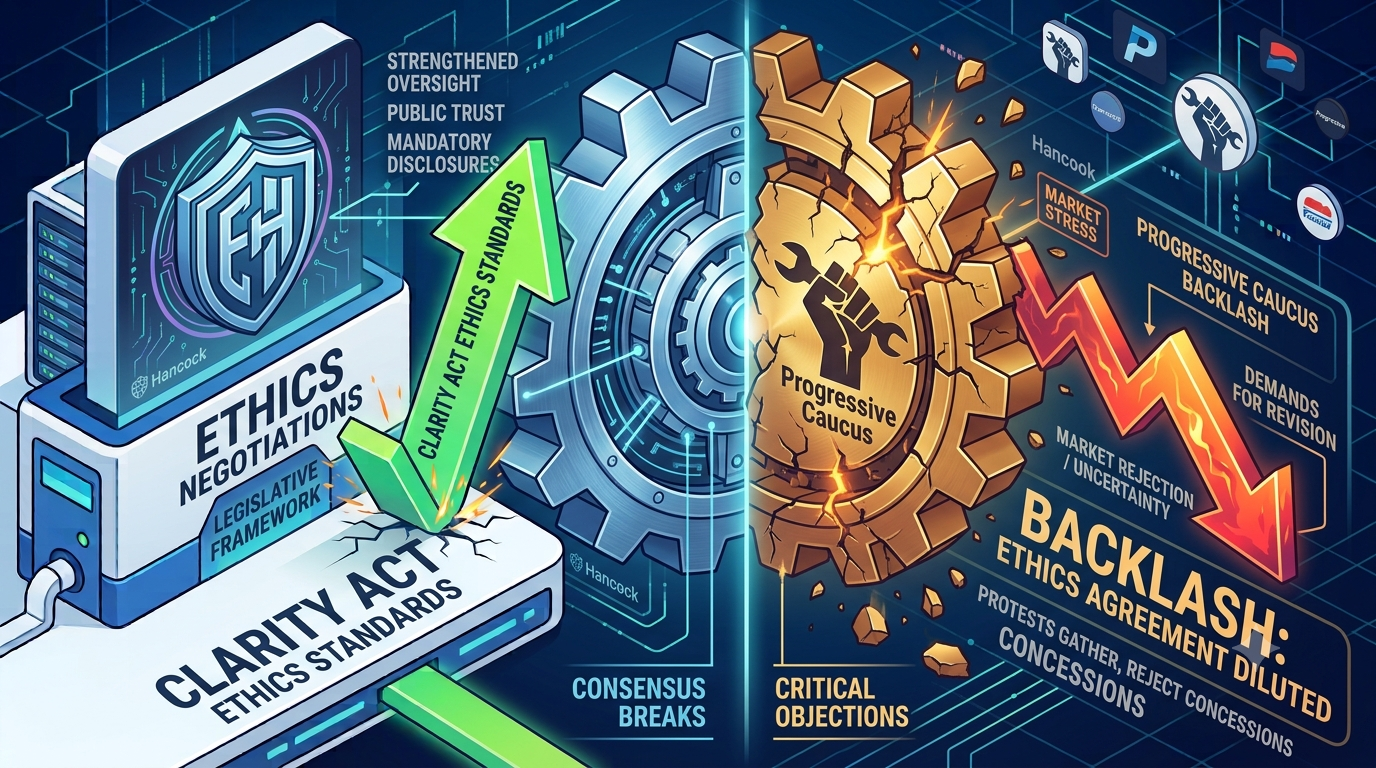
Clarity Act ethics negotiations have entered a new phase. President Trump agreed to the ethics provisions.
Democratic Senator Kirsten Gillibrand is now facing backlash. Progressive groups are criticizing her compromise efforts.
Why Clarity Act ethics negotiations matter
Progressive groups including Indivisible and Demand Progress criticized Gillibrand. Axios reported on the letter sent to Democratic offices.
“Senator Gillibrand is a prime example of a Democratic leader,” the groups said. “Her conduct undermines efforts to hold the Trump administration accountable.”
The backlash comes amid Gillibrand’s crypto ties. Her son Theodore founded a new crypto firm. American Perpetuals Exchange Corp (APAC) raised millions. Ripple co-founder Chris Larsen is an investor.
APAC plans to offer crypto perpetual futures. The firm is seeking CFTC regulatory approval. Representatives have met with SEC-CFTC staff. This timing fueled criticism and intensified negotiations.
Crypto bill advances to bipartisan stage
Bipartisan talks on ethics rules are now underway. The White House and Senators Lummis and Moreno reached an agreement.
However, a new hurdle emerged. Senator Thom Tillis claimed the ethics agreement is “not quite there.” Exemptions in the text remain a concern.
This signals prolonged negotiations. Progressive groups challenge Gillibrand’s crypto ties. A Senate vote could face delays.
The Clarity Act needs 60 votes to pass. It is a top priority for Senate Republicans. The White House and crypto industry also support it.
Nevertheless, the odds of passage jumped above 50%. This follows comments from Coinbase Vice Chair Ryan VanGrack. Treasury Secretary Scott Bessent also weighed in.