


XRP weekly rally hit 52% in five trading days. This is its strongest weekly performance in 21 months.
The move was not a single-catalyst spike. A Treasury buyback, a White House crypto summit, and aggressive whale accumulation all converged on the same narrow window.
Why XRP weekly rally matters
XRP closed the week of August 18 as the best-performing asset among the top ten cryptocurrencies. It beat Bitcoin by more than 40 percentage points. It beat Ethereum by more than 45.
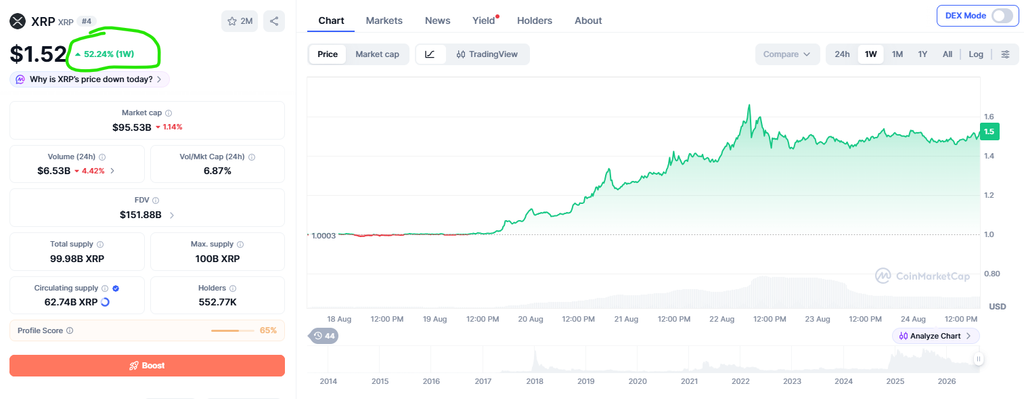
The rally marked the first sustained price advance since the SEC settlement. This now correlates with improving on-chain metrics. For seven months, XRP traded between $0.90 and $1.10. Ripple’s corporate fundamentals strengthened in the background nevertheless. The gap narrowed sharply over five days.
The Treasury buyback that unlocked the rally
The catalyst arrived on August 19. Treasury Secretary Scott Bessent announced a buyback expansion. The size of each buyback would double from $2 billion to $4 billion. The new policy starts September 9.
The announcement came after the 30-year Treasury yield spiked. It reached its highest level since 2007. Buying back bonds pushes prices up and yields down. The 30-year yield fell to 5.19% within hours. Traders described the dynamic as informal yield curve control.
The effect on crypto was immediate. Bitcoin jumped from $62,000 to $69,000 within 48 hours. This was its biggest weekly gain in two years. Nevertheless, the impact on XRP was disproportionate. More than $3 billion in short positions were liquidated during the surge.
XRP’s lower market capitalization made it more sensitive. Leveraged short sellers were forced to cover. The resulting squeeze amplified the underlying move. Lower yields make bonds less attractive. This frees capital to rotate into high-beta positions. XRP became the primary beneficiary among large-cap altcoins.
The White House summit and CLARITY Act
On the same day, a separate catalyst emerged. The White House hosted a crypto policy summit. Ripple CEO Brad Garlinghouse attended. SEC Chairman Paul Atkins was also present. Members of Congress who co-sponsored the CLARITY Act attended as well.
President Trump publicly urged Congress to pass the legislation. The CLARITY Act would classify XRP and similar tokens as digital commodities. This would place them under CFTC oversight. They would no longer be securities under the SEC.
The CLARITY Act represents the most significant potential shift in U.S. crypto regulation. It would remove the last remaining ambiguity about XRP’s legal status. The bill faces a Senate procedural vote on September 15. Polymarket prediction contracts give it approximately 16% odds of passing.
The market responded to the optics of the summit itself. Brad Garlinghouse standing alongside the SEC chairman and the president sent a powerful signal. XRP price jumped roughly 30% in two days following the summit. It broke a year-long downtrend in the process. The move took the token from $1.00 to $1.31 before additional catalysts pushed it higher.
Technical breakout and whale accumulation
The regulatory catalyst dovetailed with a technical breakout. XRP broke through a resistance zone between $1.00 and $1.05. This zone had held for the better part of 2026. The breakout triggered stop-losses and algorithmic buying.
On-chain data from Santiment showed whale accumulation accelerating during the rally. Wallets holding between 1 million and 10 million XRP added 4.8% to their holdings. This occurred within the same five-day window.
Convergence mechanism
The magnitude of the move came from the alignment of events. The Treasury buyback set the macro stage. It lowered yields and forced short covering. The White House summit changed the regulatory narrative. It altered the perception of XRP’s legal status.
The technical breakout converted sentiment into forced buying. Whale accumulation added underlying demand. This created a self-reinforcing cycle. Short covering lifted prices, which attracted more buyers. The demand pulled in whales, which further reduced available supply.
What comes next for XRP
The token now faces a series of resistance levels. The first major hurdle is $1.50, a key technical and psychological level. A sustained move above that could target $1.80 to $2.00. This range corresponds to major Fibonacci retracements from the 2025-2026 decline.
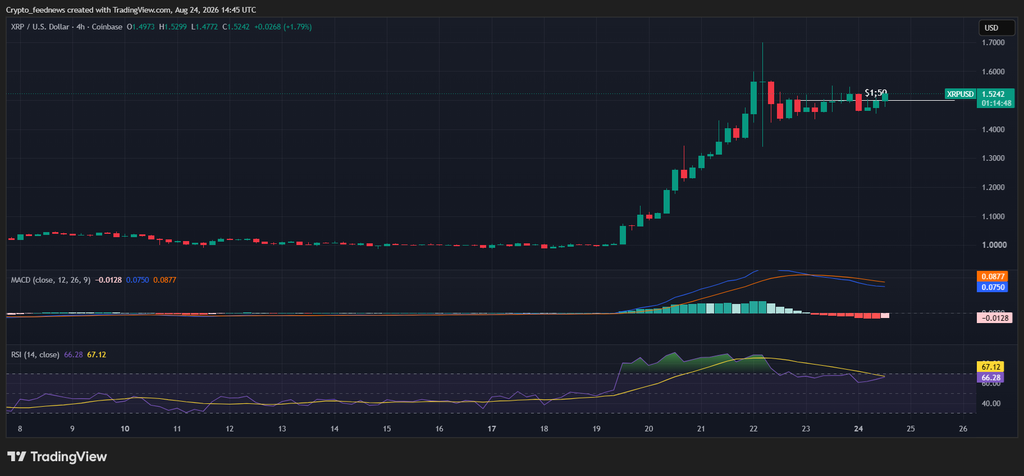
Nevertheless, the CLARITY Act remains a source of uncertainty. Senate passage is far from certain. The September 15 vote could swing in either direction. A delay or failure could trigger profit-taking. The macro backdrop also remains fluid. Oil price volatility and economic data could shift the risk-on environment.
Still, the structural tailwinds are stronger than at any point this year. The combination of regulatory clarity, institutional adoption, and improving on-chain metrics has created a setup that is difficult to ignore. XRP’s 50% weekly rally is a signal that the market is starting to price in this new reality.