

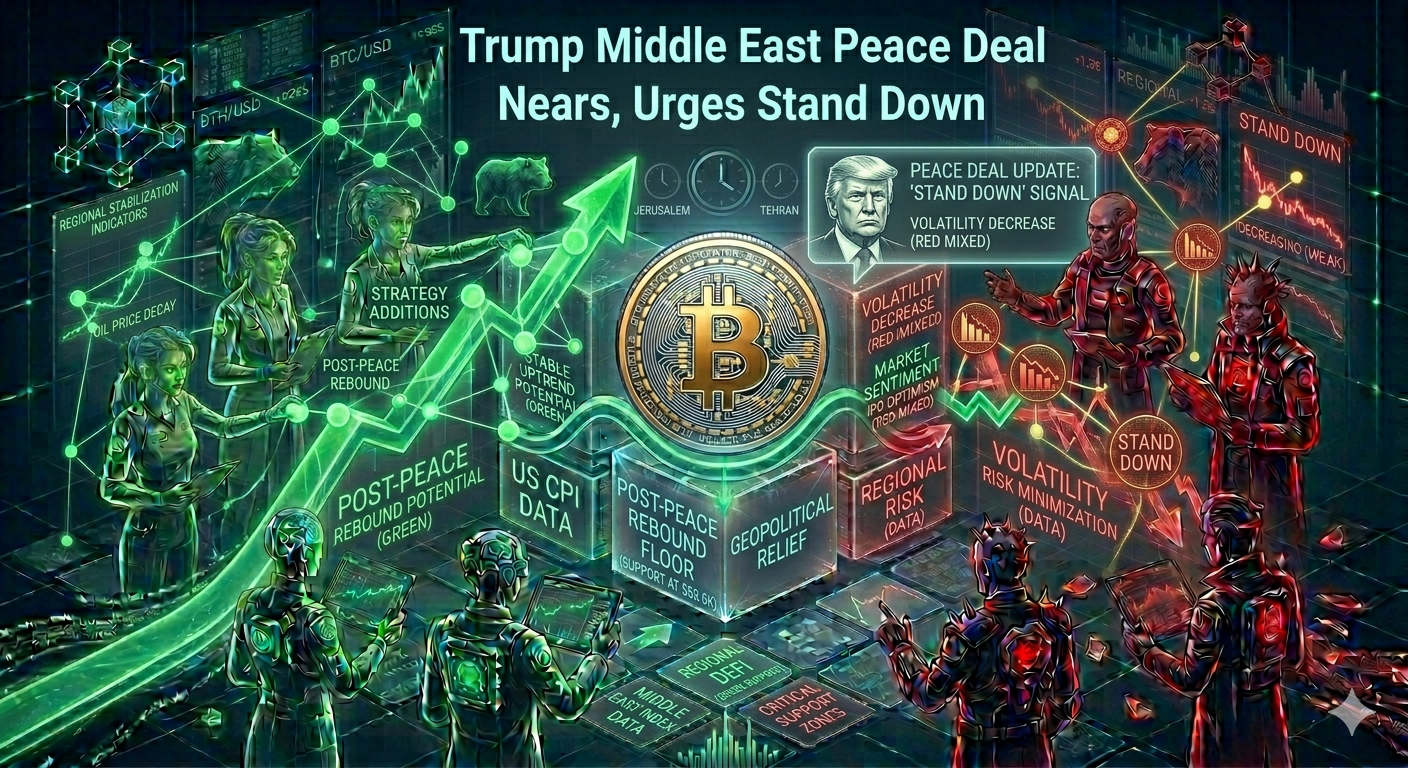
Trump Middle East peace deal is very close, according to the President. On Sunday, he urged all sides to stand down after a strike on Beirut that he warned could disrupt the talks.
Consequently, crypto markets are watching closely.
Trump urges Israel and Hezbollah to stand down
In a Truth Social post on Sunday, Trump said the morning attack on the Lebanese capital should not have happened. Specifically, this is especially concerning as Washington nears an agreement with Iran.
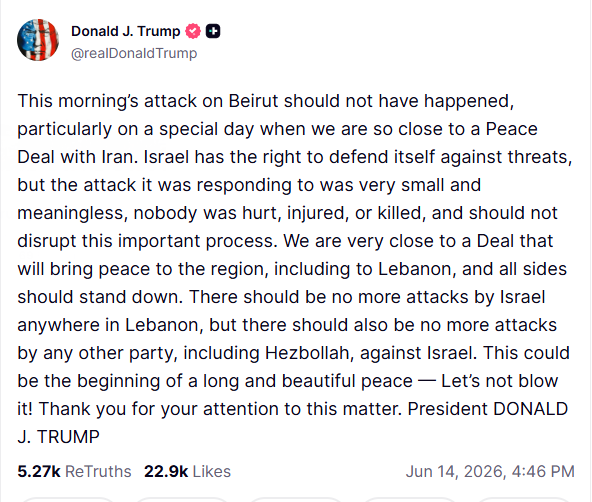
He acknowledged Israel’s right to defend itself. Nevertheless, he described the attack it was responding to as small and without casualties. Therefore, he argued that it should not derail the process.
“We are very close to a Deal that will bring peace to the region, including to Lebanon, and all sides should stand down,” he wrote. Furthermore, he called for an end to Israeli attacks anywhere in Lebanon. Similarly, he said there should be no further attacks by any other party, including Hezbollah, against Israel.
He framed the moment as a potential turning point. For example, he said it “could be the beginning of a long and beautiful peace.” Consequently, he urged the parties not to blow it.
Why the Trump Middle East peace deal matters for crypto
The statement lands amid an intense diplomatic push. Trump has repeatedly said a deal with Iran is near, even suggesting it could be signed today. However, Iranian officials have said no final text exists and that key disagreements remain. Therefore, the conflicting signals have kept traders watching the region closely.
For crypto markets, the stakes are familiar. Bitcoin has moved on headlines tied to the US‑Iran talks in recent days. For instance, it rose as signs of de‑escalation lowered the geopolitical risk premium. Conversely, it slipped when tensions flared. As a high‑beta asset that trades around the clock, Bitcoin tends to react quickly to shifts in global risk sentiment. Thus, a possible regional peace deal is a live input for digital‑asset prices.
US‑Iran draft deal eyes Hormuz reopening
The US and Iran appear closer to a temporary peace deal after new details of a draft memorandum emerged over the weekend. According to a Reuters report, the proposal would have Iran allow commercial shipping through the Strait of Hormuz. Meanwhile, the US would relax naval surveillance near Iranian ports. Additionally, there would be a 60‑day window to negotiate a broader agreement on Tehran’s nuclear program and sanctions relief.
The Strait of Hormuz carries about a fifth of the world’s oil. It has been a flashpoint in recent months, disrupting shipping and unsettling energy and financial markets. Therefore, a reopening could ease fuel and energy prices, experts say. Trump signaled a final deal could be signed Sunday. Moreover, he said the Strait would reopen “immediately” after both sides sign.