


Bitcoin faces rate test from a possible second Fed hike. HashKey Group researcher Tim Sun shared this view today.
He said Bitcoin’s path depends more on U.S. financial conditions. Therefore, the stalled CLARITY Act matters less by comparison. Specifically, an October increase could change how investors read September’s move.
Why Bitcoin faces an October rate test
The Fed raised its target range by a quarter point on September 16. The new range is 3.75%–4.00%. All 12 voting members supported the decision. The Fed said inflation remained elevated.
Sun said the September increase was largely priced in. Consequently, Bitcoin and the crypto market rallied afterward. The key question now is whether the Fed raises rates again in October.
An October increase would affect several market parts at once. For example, higher long-term rates could pressure demand. Tighter dollar liquidity would also weigh on prices. Meanwhile, changes in ETF flows and leverage could affect any price move.
What the CLARITY vote means for crypto firms
On September 15, the Senate voted 49–50 against ending debate. The motion needed 60 votes. Senators did not vote on final passage of the Digital Asset Market Clarity Act.
Sun said the bill’s outcome would not substantially change Bitcoin’s characteristics. Its main purpose is to settle market rule questions. Specifically, it would define where SEC authority ends and CFTC authority begins.
A long delay could still matter for the industry nevertheless. Sun said unresolved rules may affect capital commitments. Investors may hesitate to fund crypto companies and infrastructure over several years.
ETF demand and Treasury yields remain in focus
Bitcoin rose after the September Fed decision. It then pulled back from the $87,000 area. U.S. spot Bitcoin ETFs recorded five consecutive sessions of net inflows through September 23.
Sun said short-term ETF flows can follow Bitcoin’s price. Therefore, they do not reliably signal the next move. This distinction matters for his October assessment. A run of inflows shows continued buying. However, it does not show how buyers would react to another hike.
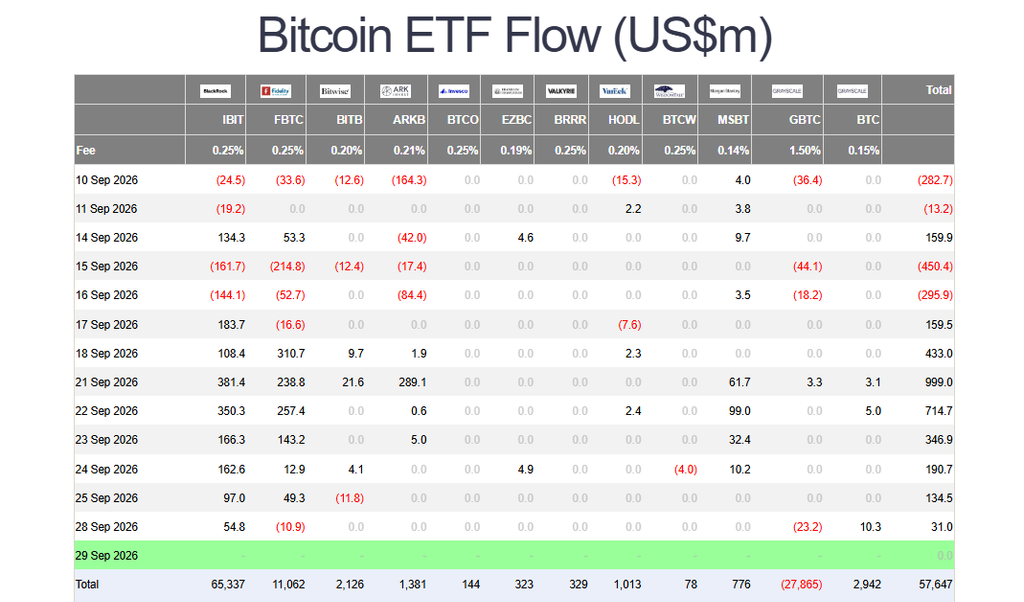
During the week ended September 18, U.S. spot Bitcoin ETFs took in about $6.1 million net. That happened despite a $433 million inflow on the final trading day alone. The subsequent positive sessions coincided with Bitcoin’s advance toward $87,000.
Meanwhile, the Fed’s September projections put the median policy rate at 4.1% for 2026. That is up from 3.8% in June. Sixteen of 18 participants placed their year-end rate above the current range. Their individual forecasts are not commitments nevertheless.
Why the October meeting matters most
Sun pointed to long-term Treasury yields as a key factor. He also cited money entering U.S. spot Bitcoin ETFs. Additionally, he highlighted leverage levels in derivatives markets.
He said stronger U.S. business activity supports the case for another hike. For example, S&P Global’s composite PMI rose to 58.4 in September. It was 56.0 in August. The 10-year Treasury yield reached 5.20% on September 24.
If the Fed hikes again, Bitcoin’s momentum could end. Conversely, sustained ETF inflows could support prices. An excessive buildup of derivatives leverage would add another risk.
What to watch next
For U.S. investors, the next fund reports matter alongside Fed policy. The October meeting is the key test. A second hike could shift sentiment quickly. Until then, Bitcoin faces rate test uncertainty with ETF flows and yields in focus.